
 English
 中文简体
中文简体 Español
Riveted Fasteners in OEM Design: How to Choose Types, Materials, and Qualified Suppliers
Content
- 1 What Are Riveted Fasteners, and When Do OEMs Specify Them?
- 2 Riveted Fastener Types: A Comparative Breakdown for Design Engineers
- 3 Material Selection and Galvanic Corrosion in Mixed-Metal Joints
- 4 Installation Cycle Times and Line Integration
- 5 Qualifying a Riveted Fastener Supplier for Production
- 6 Frequently Asked Questions About Riveted Fasteners
During a six-hour vibration test on a prototype telecom enclosure, six M3 thread-forming screws worked loose from their 1.2 mm cold-rolled steel mounting posts. The static load calculations had passed. The failure came from a joint-design gap: thin sheet metal does not hold conventional threads under sustained dynamic load. A riveted fastener, sized for that sheet thickness, would have kept every screw seated for the life of the product.
This is the reality behind most riveted fastener specifications. OEM and ODM design teams choose a rivet because the base material is too thin to tap, because only one side of the joint is reachable, or because fatigue testing eliminated every alternative. Understanding how riveted fasteners behave in those conditions shortens redesign cycles and reduces field returns.
What Are Riveted Fasteners, and When Do OEMs Specify Them?
A riveted fastener is a mechanical anchor that is permanently deformed during installation to create a joint or an internal thread in a base material, most often thin sheet metal.
Core definition: a riveted fastener transfers load through plastic deformation of its own body against the base sheet, forming a permanent mechanical interlock that resists pull-out and vibration better than a thread cut directly into thin material.
Riveted fasteners earn their specification in three situations:
- Sheet stacks below 2 mm, where tapped threads strip under torque
- One-side-only access where a nut cannot reach the back of the joint
- Permanent, high-vibration joints that cannot be re-torqued
In these conditions, a riveted fastener moves the failure point from the base sheet to the fastener body. The trade-off is permanence: most riveted fasteners cannot be removed without drilling, so they suit joints that are disassembled only at end of life.
Riveted Fastener Types: A Comparative Breakdown for Design Engineers
Five riveted fastener types cover nearly all precision assembly requirements: solid rivets, blind rivets, rivet nuts, self-piercing rivets, and semi-tubular rivets. Each maps to a specific access and load condition.
| Fastener type | Access required | Typical application | Strength character |
| Solid rivet | Both sides | Structural frames, aerospace skins | Highest shear strength, no thread |
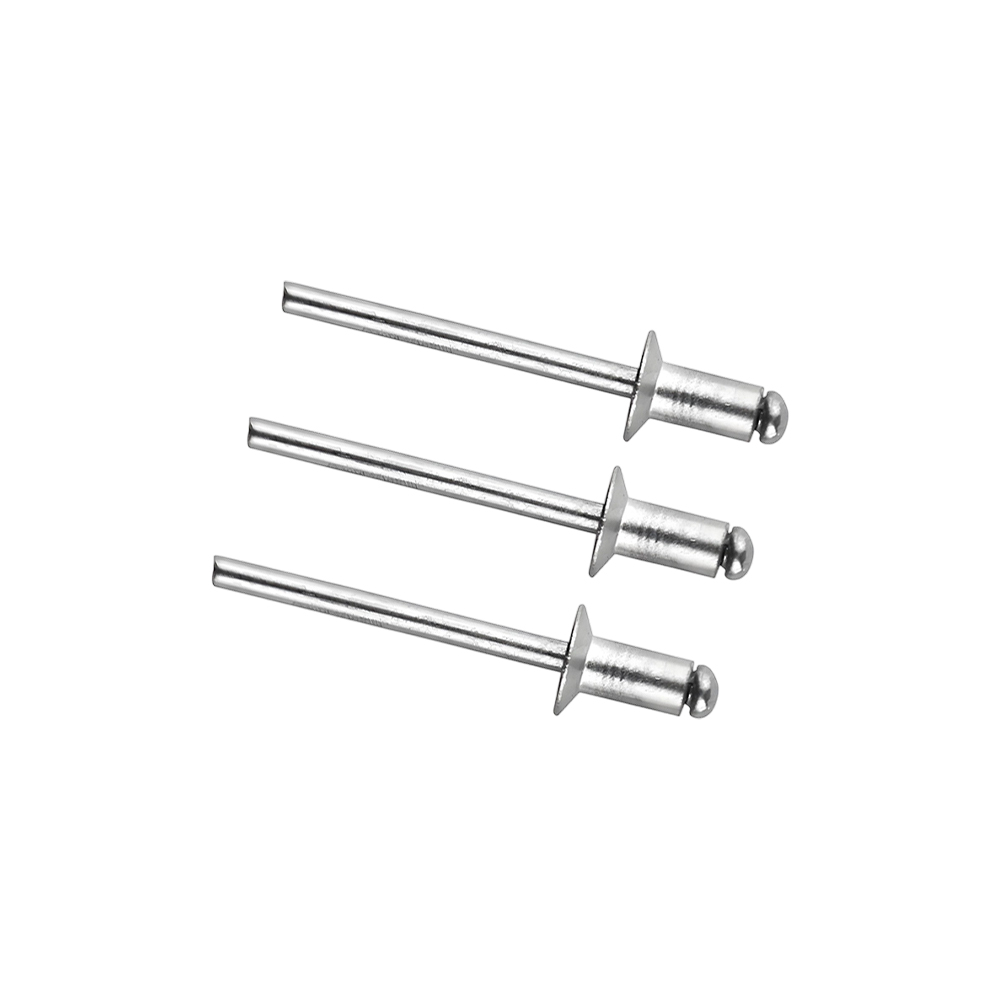
| Blind rivet | One side | Enclosures, panels, cable trays | Moderate shear, fast installation |
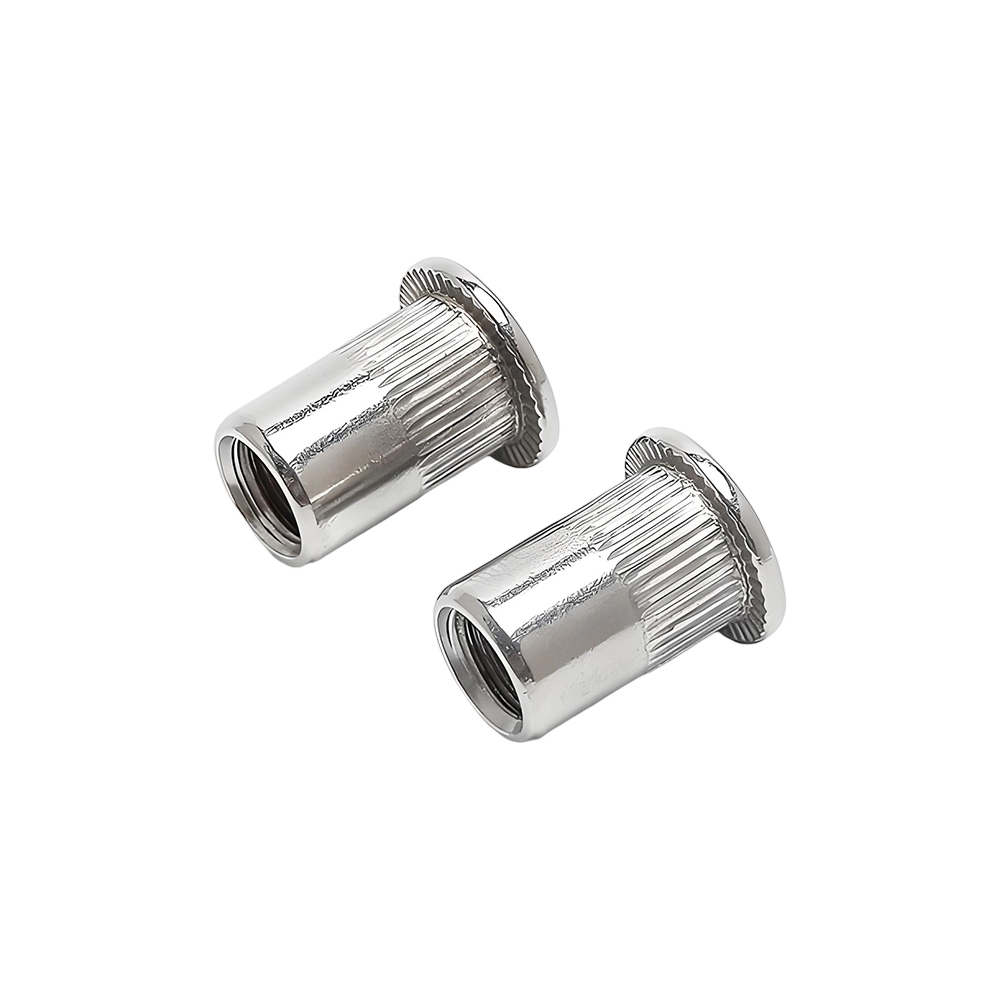
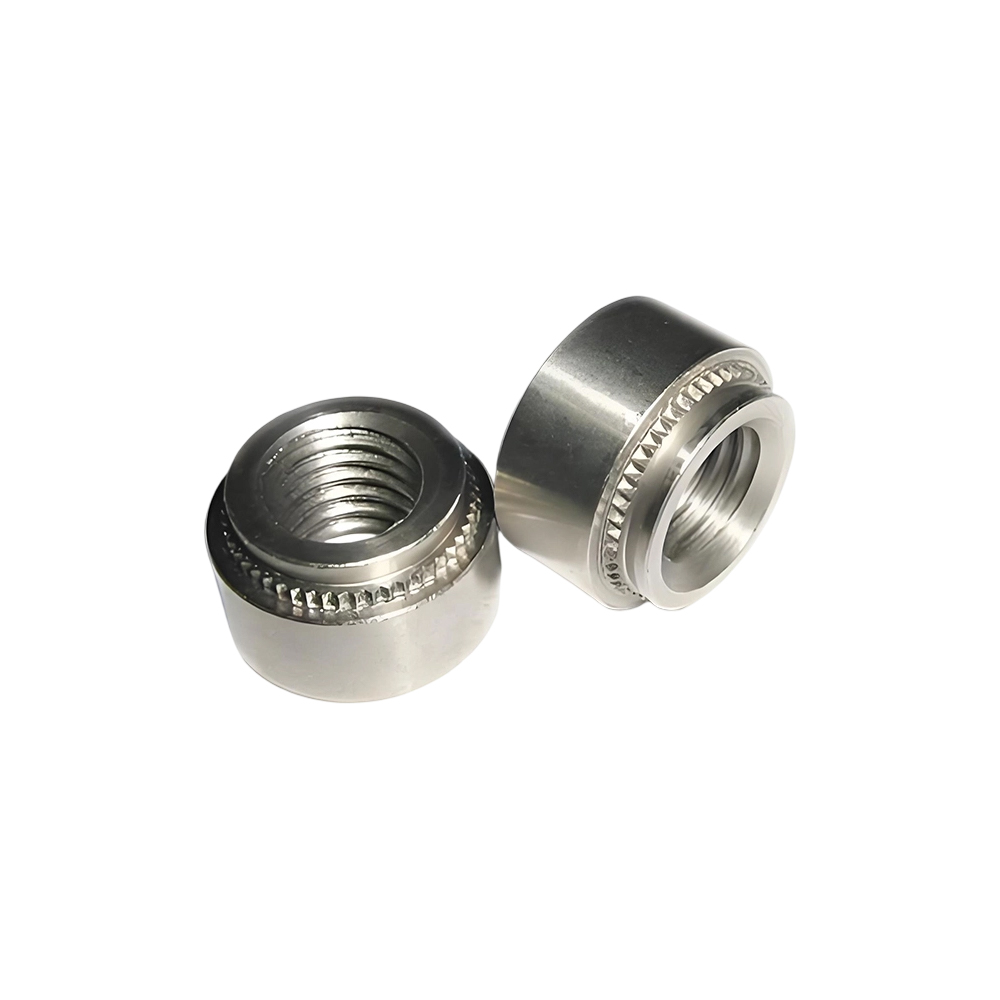
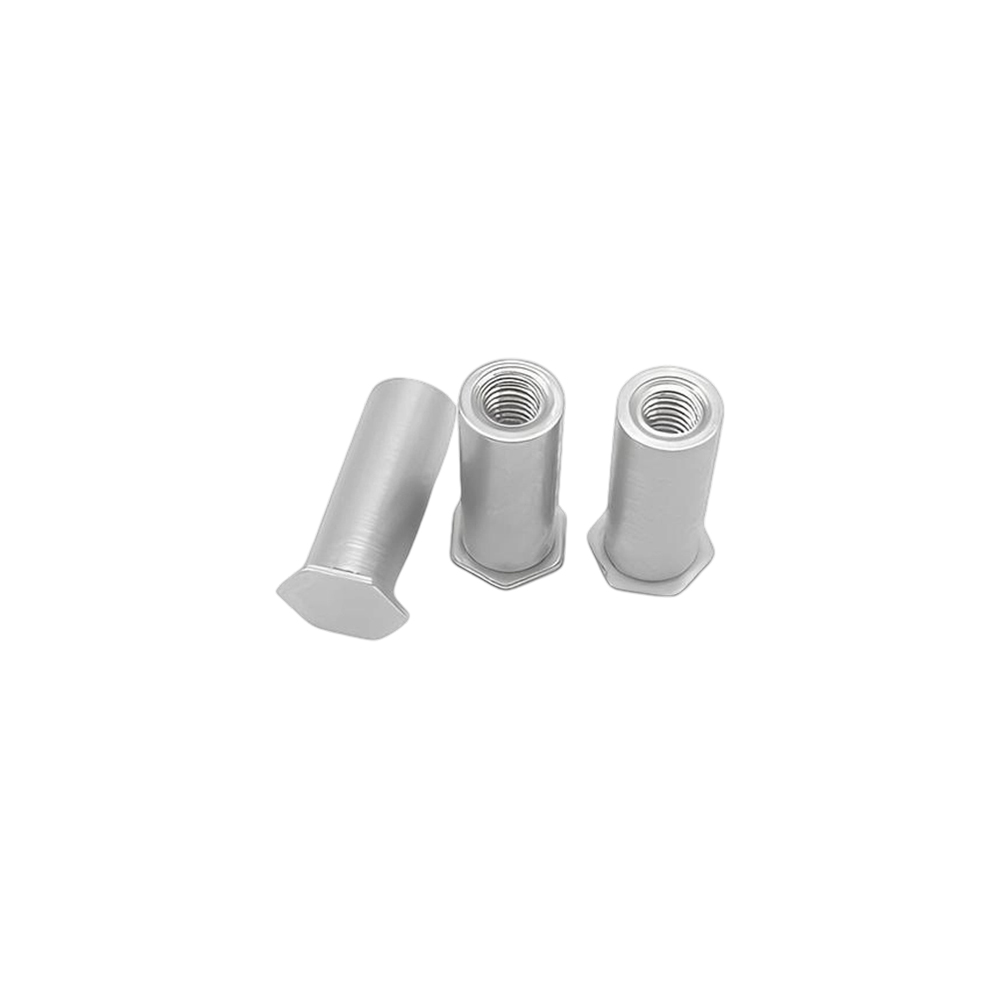
| Rivet nut | One side | Removable components on thin sheet | Strong pull-out, internal thread |
| Self-piercing rivet | Both sides with die | Automotive body, mixed materials | High strength, no pre-drilled hole |
| Semi-tubular rivet | Both sides | Brake linings, levers, light hinges | Low setting force, partial hole |
Check access first, then load direction, then whether the joint will ever be disassembled. The two most common selections in electronics and energy storage housings are blind rivets and rivet nuts.
Choose a blind rivet when
- The back side is unreachable
- Stack thickness falls in the rivet grip range
- The joint is never disassembled
- Shear load dominates and the hole is pre-drilled
Choose a rivet nut when
- The joint needs maintenance access
- Base sheet thickness is between 0.5 mm and 3 mm
- Torque must stay predictable on the line
- Heat from welding would damage paint or coatings
Material Selection and Galvanic Corrosion in Mixed-Metal Joints
The riveted fastener material must be selected against the base sheet chemistry, not in isolation, because galvanic corrosion destroys mismatched joints faster than mechanical overloading.
Aluminum sheets dominate enclosures and energy storage housings because of weight. Carbon steel rivets in an aluminum sheet create a galvanic couple that corrodes the aluminum around the rivet head, especially with humidity. The standard solution is to match the fastener to the sheet: 5056 or 6061 aluminum rivets for aluminum structures, and passivated 302 stainless steel for steel structures.
Common rivet body materials and their role
- 5056 aluminum - standard for aluminum sheets; behaves sacrificially, so corrosion stays predictable
- 6061-T6 aluminum - higher shear strength for structural joints
- 302 stainless steel - high strength, resistant to industrial atmospheres
- 316 stainless steel - for coastal or chemical environments with chloride exposure
- Zinc-plated carbon steel - low-cost option for indoor dry assemblies
Corrosion rule of thumb: keep the rivet body equal to or slightly more anodic than the base sheet. When in doubt, salt-spray a sample joint for 200 hours before approving the drawing.
Installation Cycle Times and Line Integration
Installation method, not unit price, dominates the real cost of a riveted fastener. An automated self-piercing system installs one in about 3 seconds; a manual solid rivet set with two operators takes more than 20.
The spread matters at volume. A product with 40 riveted fasteners per unit at 200,000 units per year needs 8 million installations annually. Moving from manual blind riveting at 11 seconds to automated self-piercing at 3 seconds recovers over 17,000 hours of line labor each year.
Five steps to a correctly set blind rivet
- Drill or punch the hole 0.1 mm to 0.2 mm larger than the rivet body diameter.
- Insert the rivet until its head seats against the visible sheet.
- Slide the setting tool nose over the mandrel until it contacts the head.
- Actuate the tool so the mandrel collapses the tail against the hidden sheet.
- Confirm the set: the tail is formed, the mandrel breaks, and the head shows no cracks.
Qualifying a Riveted Fastener Supplier for Production
Qualify a riveted fastener supplier on process capability, in-house inspection, and lot traceability before price, because a failed batch stops the line for hours no matter who pays.
A supplier with cold heading, stamping, and CNC capacity in one network shortens the qualification cycle because the fastener and the sheet-metal component can be validated together. Yongji Precision Hardware Co., Ltd. operates four production bases in Suzhou, Yangzhou, and Vietnam and has served international OEM and ODM customers for more than two decades. Its cold heading lines and precision testing laboratory support fastener development from design review to mass production and global delivery.
Supplier verification checklist
- Cold heading capability for the rivet body and mandrel geometry
- In-house precision testing laboratory with hardness, tensile, and salt-spray equipment
- Plating thickness verification and documented control of the coating supplier
- Statistical process control on body diameter, head height, and hole tolerance
- First-article inspection results across multiple cavities and tool positions before production release
Practical rule: request a 300-unit pilot lot with first-article data before mass production. If a supplier cannot document dimensional spread and corrosion results at pilot stage, the risk transfers to your line.
Frequently Asked Questions About Riveted Fasteners
Can riveted fasteners create a watertight joint?
Standard blind rivets are not watertight. Sealed blind rivets with closed tails provide a basic barrier, and for enclosures rated IP65 or higher, apply a sealant around the set head and verify with a water ingress test.
What is the difference between a rivet nut and a weld nut?
A weld nut requires heat-affected zones and access for a weld gun. A rivet nut is installed from one side without heat, so it can be placed after painting or powder coating. Weld nuts cost less per piece; rivet nuts save line complexity.
How do I choose the correct rivet length?
Use the manufacturer's grip range table instead of calculating from stack thickness alone for blind rivets. Every standard blind rivet lists a grip range that must cover the total clamped thickness; a body too short forms an incomplete tail, and one too long creates an oversized head with low clamp force.
Can a riveted fastener be removed without damaging the panel?
No. Riveted fasteners are permanent by design. Removal requires drilling out the set head, which enlarges the hole by roughly 0.5 mm. If disassembly is planned, specify a larger replacement fastener or a removable insert.
Copyright © 2026 by Yongji Precision Hardware Co., Ltd. Rights Reserved.
Custom Fasteners & Turned Parts, Precision Hardware Manufacturers
