
 English
 中文简体
 Español
Battery Housing Stamping: Materials, Tolerances, and Process Selection
Content
- 1 Battery Housing Stamping Covers Cells, Modules, and Full Packs
- 2 Material and Gauge Selection Decides Cost and Formability
- 3 Seven Design Rules That Keep Stampings Cost-Effective
- 4 Stamping vs Deep Drawing vs Extrusion vs Casting for Battery Enclosures
- 5 Qualifying a Stamping Partner for Battery Enclosures
- 6 Frequently Asked Questions About Battery Housing Stamping
Every electric-vehicle battery pack is a structural compromise. A 60-80 kWh tray, typically 1.5 to 2.5 meters long, must stay flat within about +/-0.3 mm, survive vibration and crush loads, and meet a cost target that the business case treats as binding. Battery housing stamping resolves these constraints together: sheet-metal enclosures formed by punch-and-die tooling at 5 to 20 second cycle times, with progressive dies holding dimensional tolerances down to +/-0.05 mm. The real decision is which material, which process variant, and which supplier turn that capability into a production program.
Battery Housing Stamping Covers Cells, Modules, and Full Packs
Battery housing stamping is the umbrella term for every sheet-metal enclosure that contains a cell, a module, or the complete pack, from cylindrical cell cans to one-piece trays. The same press shop that stamps a 4680 cell can also stamp module frames and a two-meter pack tray, which is why the process appears at every level of the battery structure.
Typical components include:
- Cylindrical steel cans for 18650, 21700, and 4680 cells
- Module end plates and side frames
- One-piece pack trays, including tailor-welded blanks
- Cover panels, service lids, and mounting brackets
- Busbar and current-collector carriers
- EMI shield covers for battery management boards
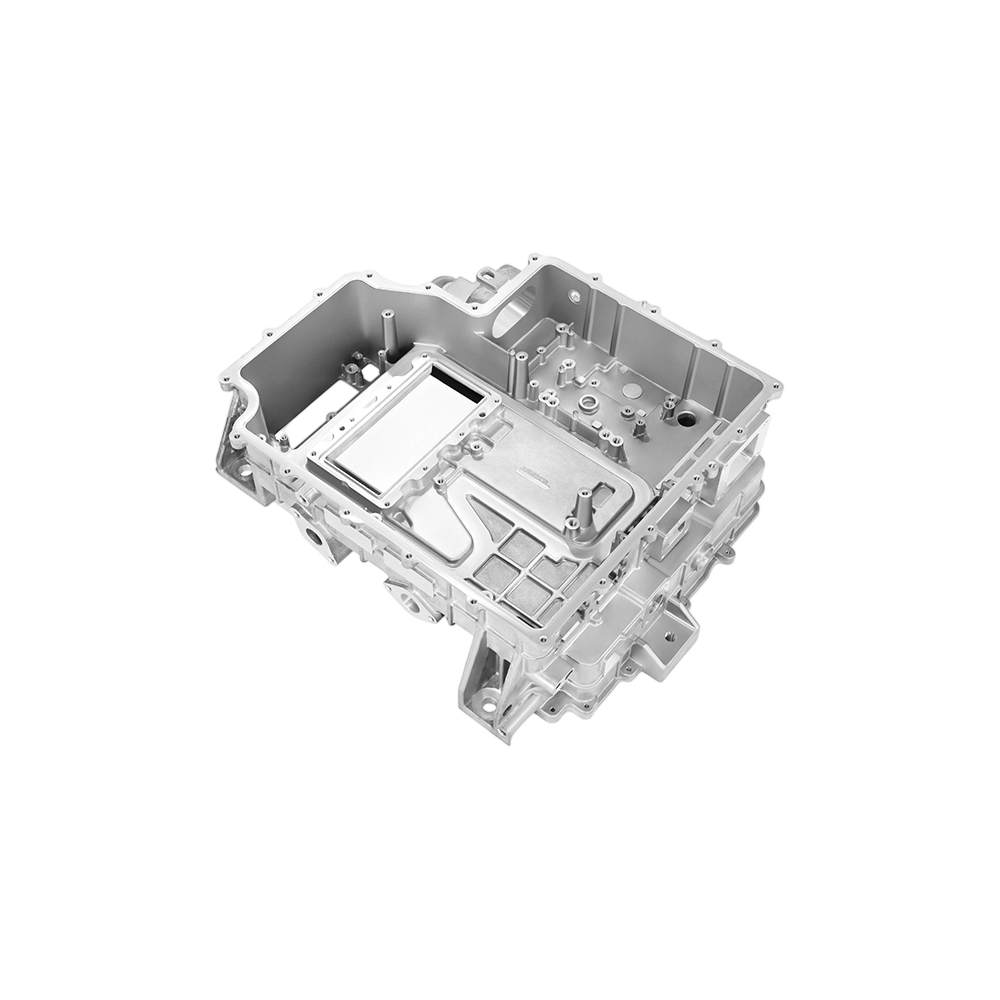
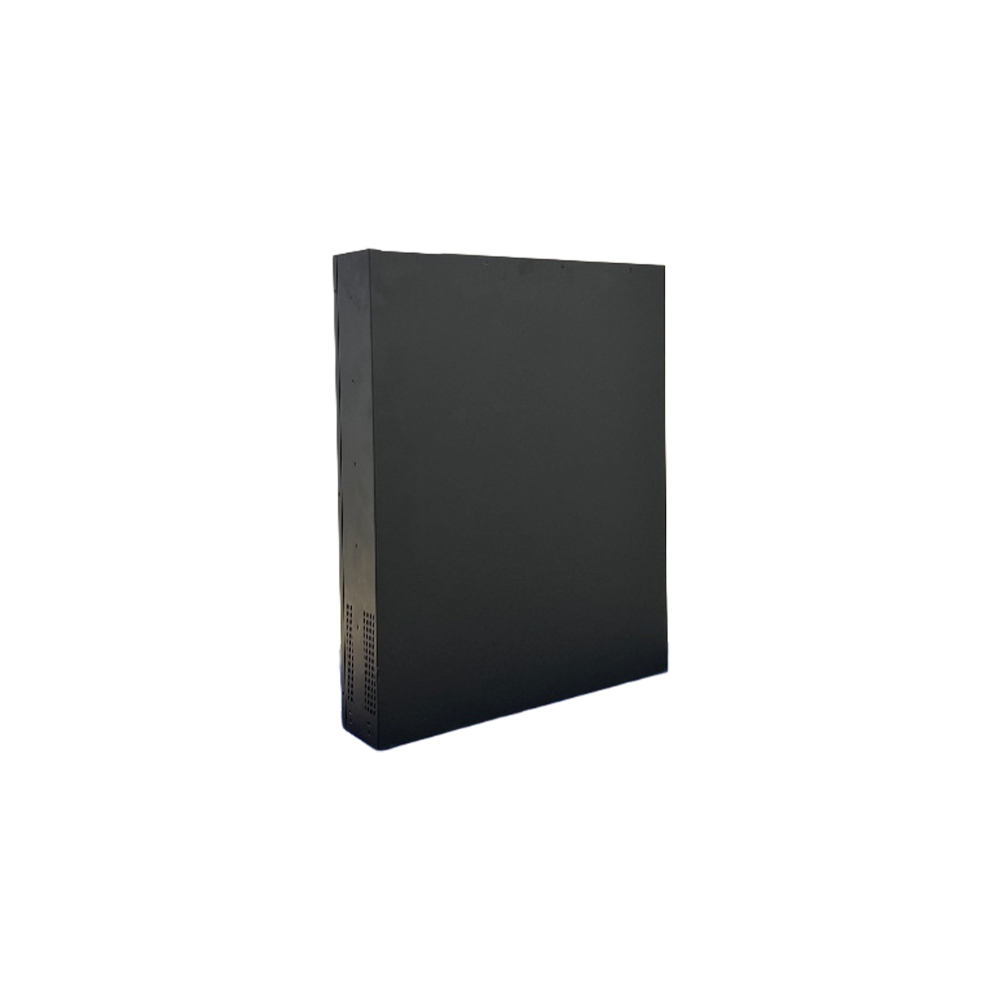
 Precision Stamped and Drawn Battery HousingThis housing protects battery cells with corrosion-resistant materials and smooth surfaces. It suits various cell sizes and supports custom openings, thicknesses, and finishes, making it a key part to consider for reliable battery packaging.View Product →
Yongji Precision Hardware Co., Ltd. has produced progressive-die stampings since 2003, running blanking, drawing, flanging, trimming, and piercing in one die set, so one press cycle delivers a finished housing with minimal dimensional drift.
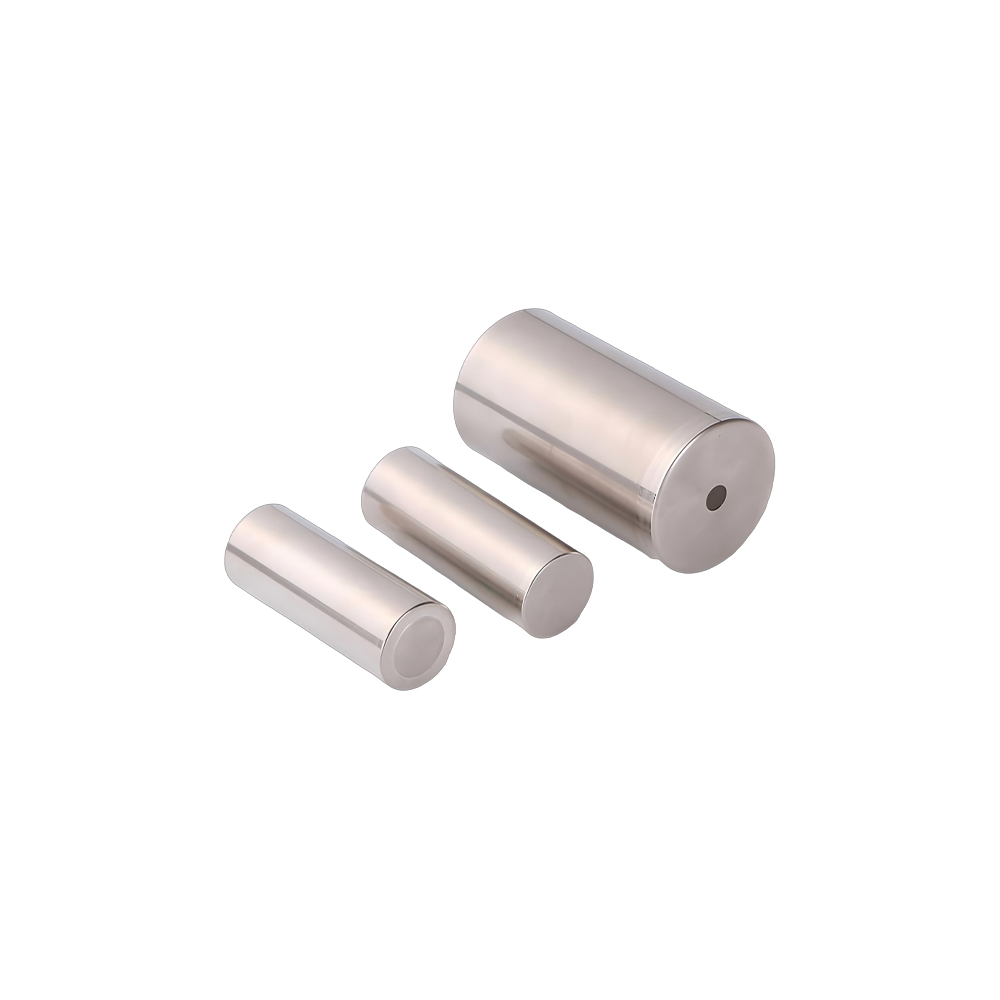
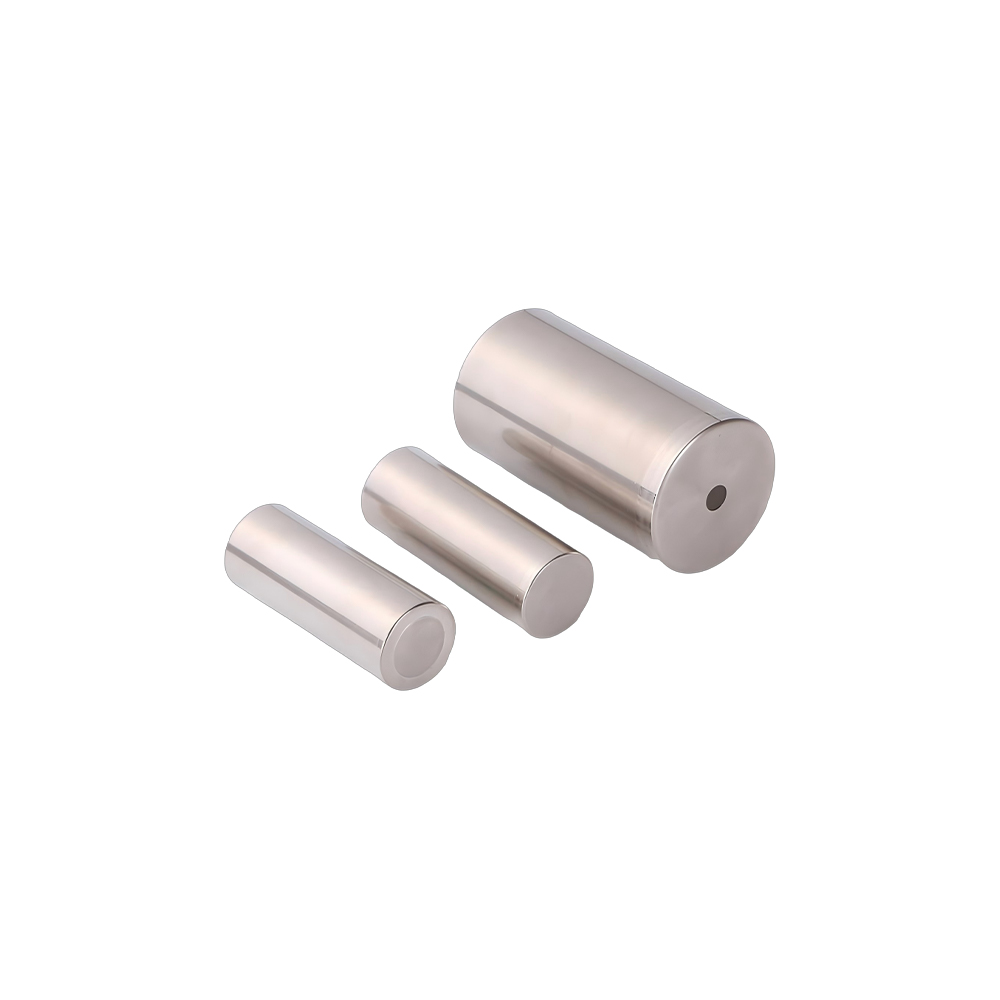 Cylindrical Steel Can for Lithium-ion Battery CellsA cold-extruded and stretched cylindrical can for energy storage and power batteries. Its nickel-plated or stainless steel construction aids pressure bearing, insulation, and corrosion resistance, supporting safe cell encapsulation in vehicles and devices.View Product →
Material and Gauge Selection Decides Cost and Formability
Material choice starts with stiffness and corrosion duty, then formability, then cost per kilo, because the cheapest blank produces the most expensive scrap if it cannot be drawn reliably. In automotive programs, low-carbon steel is the default for structural trays; 5xxx-series aluminum earns its place when mass targets dominate.
DC03 and DC04 steels deliver the elongation needed for deep draws; HSLA grades around 350-550 MPa yield strength add stiffness without extra gauge. Aluminum 5052-H32 and 5754-O draw well, but because aluminum is about 2.9 times less dense than steel, enclosure walls are drawn 1.3 to 1.5 times thicker to match stiffness.
| Material grade | Typical gauge | Yield strength | Formability | Primary production risk |
| Mild steel DC03/DC04 | 0.8-2.5 mm | 140-220 MPa | Excellent for deep drawing | Surface corrosion before coating |
| HSLA steel, S350GD class | 0.8-2.0 mm | 350-550 MPa | Good; watch springback | Springback at flanges and rib ends |
| Tailor-welded steel blank | 0.7-2.5 mm | 140-550 MPa per zone | Good when weld seam is sound | Weld seam cracking during deep draw |
| Aluminum 5052/5754 | 1.2-3.0 mm | 90-220 MPa | Good; prone to galling | Tearing at tight radii; die galling |
Seven Design Rules That Keep Stampings Cost-Effective
A battery housing designed for stamping from the first sketch holds tighter tolerances, consumes less material, and produces fewer rejects than a part reworked into a die after design freeze. These seven rules separate a stable die from a chronic rework problem.
- Specify 1-3 degrees of draft on deep-drawn walls; zero draft is possible but raises tooling cost and press force.
- Keep corner radii at least three times material thickness to avoid thinning and fracture.
- Hold hole-to-bend spacing at two to three times thickness and hole-to-edge clearance at one to two times.
- Use ribs and beads instead of thicker steel; a 6 mm rib raises local bending stiffness of a 1.2 mm panel by 40-70% without adding mass.
- Keep wall thickness uniform; intentional thinning adds die stations and shortens tool life.
- Allow +/-0.15 to +/-0.30 mm on formed dimensions; reserve +/-0.05 mm for pierced features.
- Place draw beads near corners, not across long flat spans, to control material flow.
Typical dimensional tolerance by forming process; smaller values mean tighter geometric control.
Stamping vs Deep Drawing vs Extrusion vs Casting for Battery Enclosures
Stamping wins when volume, dimensional repeatability, and cycle time matter most; casting and extrusion earn their place when geometry is too complex for a flat blank or the design demands closed sections.
| Criterion | Progressive stamping | Deep drawing | Aluminum extrusion | High-pressure die casting |
| Typical wall thickness | 0.6-2.5 mm | 0.5-2.0 mm | 1.5-4.0 mm | 2.5-6.0 mm |
| Tolerance range | +/-0.05 to 0.20 mm | +/-0.10 to 0.30 mm | +/-0.30 to 0.50 mm | +/-0.20 to 0.50 mm |
| Tooling investment | Medium to high | High | Low | Very high for large dies |
| Minimum economic volume | 50,000 parts/year | 50,000 parts/year | 10,000 parts/year | 30,000 parts/year |
| Typical cycle time | 5-20 s | 15-45 s per draw stage | 2-5 min per profile | 60-180 s per shot |
The strongest production designs combine processes. Research on a car battery box that combines steel stampings with aluminum extrusions shows a 15-25% mass reduction versus an all-steel assembly, with press-shop accuracy retained. Tailor-welded blanks go further: a one-piece stamped tray with welded high-strength patches removes the separate under-battery floor protector and its fasteners.
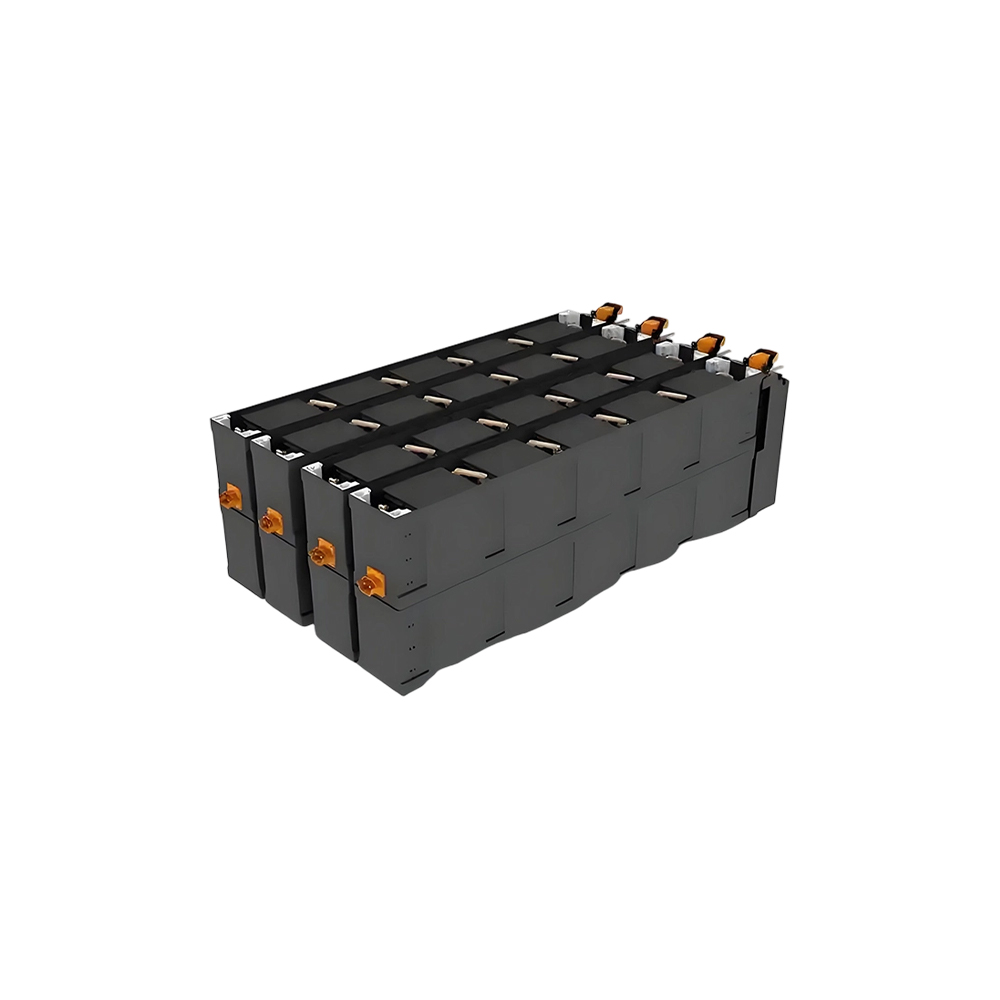
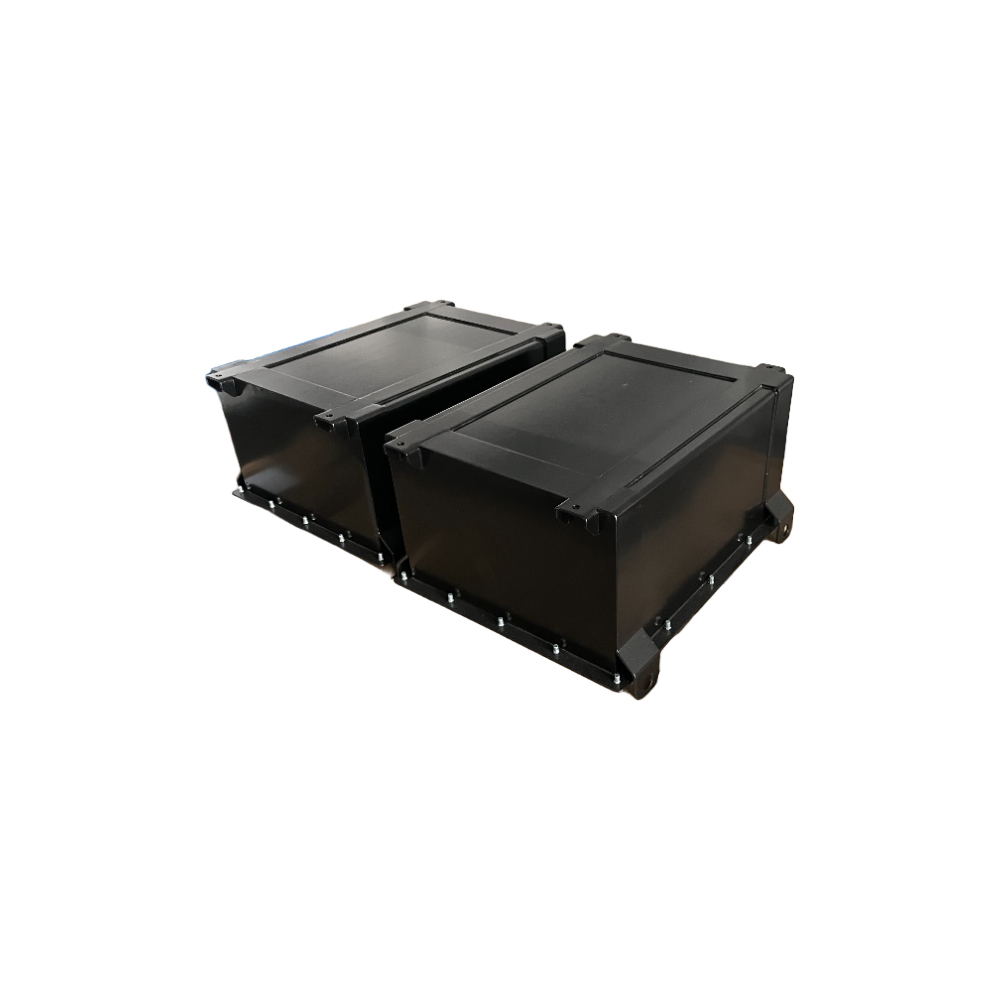
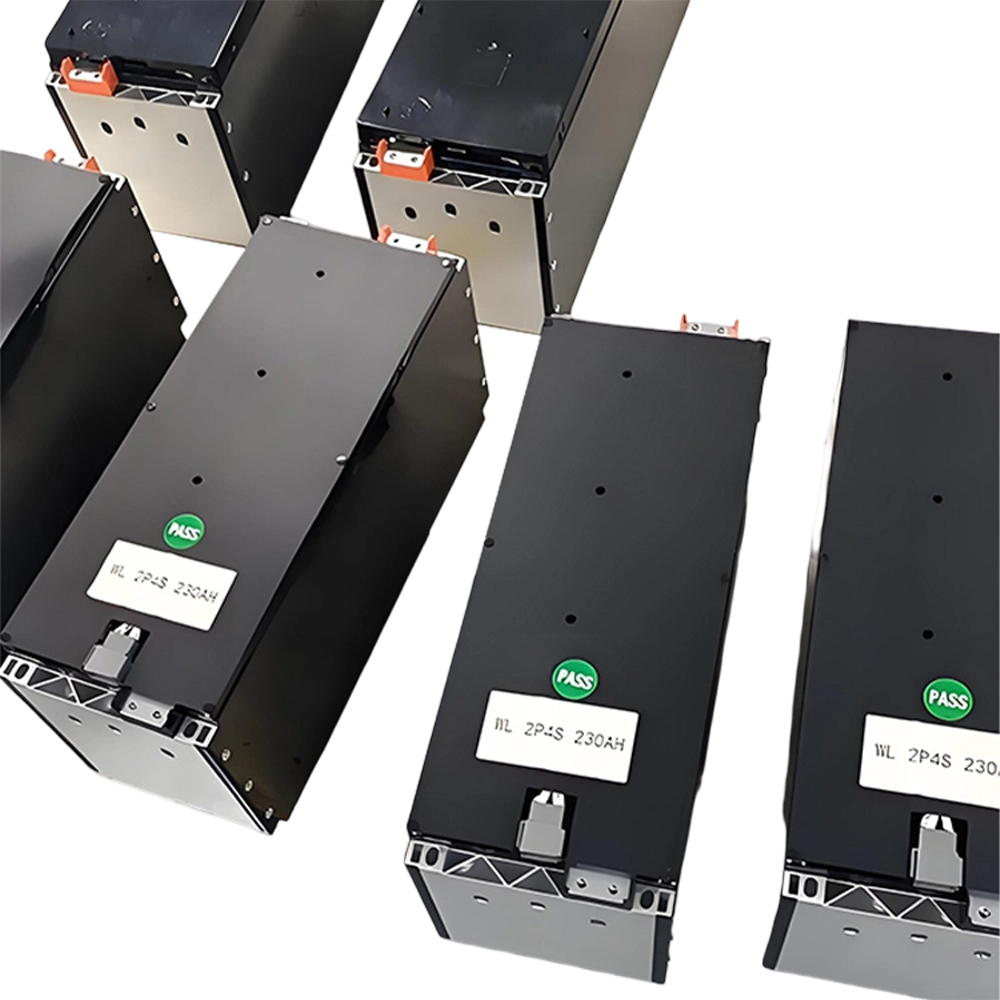 Customized Battery PACK for Diverse Power ApplicationsThis battery PACK is built from high-quality steel, alloy, or stainless steel with multiple surface finishes. It fits new energy vehicles, energy storage, tools, drones, and medical devices, offering stable power and flexible supply options.View Product →
Qualifying a Stamping Partner for Battery Enclosures
Qualify a battery housing stamping partner on process depth, in-house metrology, production footprint, and design-for-manufacturing skill, not on piece price alone, because the die determines the part's cost and quality for its entire life.
- Ask for a DFM report that flags draft, radii, and hole-placement issues before the die design is frozen.
- Confirm the in-house metrology lab covers coordinate measurement, roughness, hardness, and coating thickness.
- Request material certificates and mill traceability for every coil or blank lot.
- Audit press capacity; large one-piece trays need 1500-3000 t presses.
- Review prototype-to-production transfer data, including dimensional Cpk and scrap history.
Yongji Precision Hardware Co., Ltd. illustrates the profile to look for. Founded in 2003, it operates four production bases in China and Vietnam, with a 25,000 square meter Suzhou headquarters hosting about 50 engineering staff and a Yangzhou plant, opened in 2021, dedicated to high-volume new-energy parts. Its precision testing laboratory and multi-process lines carry housings from prototype to mass production for more than 200 international OEM and ODM customers across automotive, energy storage, and industrial electronics.
Frequently Asked Questions About Battery Housing Stamping
What is the difference between battery housing stamping and deep drawing?
Stamping is the umbrella term for blanking, piercing, flanging, forming, and drawing with metal dies. Deep drawing is one operation that pulls a flat blank into a die cavity to create a pan or cup. A typical battery housing combines both: shallow flanges and mounting features are stamped, while the main pocket is deep-drawn.
Can a battery tray be stamped with zero draft angle?
Yes. Advanced draw dies with controlled blank-holder force and tailored lubrication can produce zero-draft walls, as demonstrated in packaging-efficient stamped tray concepts presented at steel industry workshops. Zero draft raises tooling cost and press tonnage, so most programs still specify 1-3 degrees for stable production.
Which steel grade is best for a stamped battery enclosure?
Deep-drawn trays work best in DC03 or DC04 low-carbon steel, which combines elongation with low cost. Structural side rails prefer HSLA grades such as S350GD, which deliver 350-550 MPa yield strength without proportionally increasing wall thickness.
How long does stamping tooling for a battery housing take?
A progressive die for a mid-size tray or cover typically needs 14 to 22 weeks from design freeze to first article, plus 4 to 8 weeks of tryout for dimensional and leak testing. Larger one-piece tray dies with 12 to 18 stations run 20 to 30 weeks.
Recommended Products
Copyright © 2026 by Yongji Precision Hardware Co., Ltd. Rights Reserved.
Custom Fasteners & Turned Parts, Precision Hardware Manufacturers
