
 English
 中文简体
 Español
Automotive Fasteners: Material Grades, Specifications, and OEM Sourcing Guide
Content
- 1 Automotive Fasteners: The Eight Families in a Modern Vehicle
- 2 Material Grades and Coatings That Actually Matter
- 3 How to Read an Automotive Fastener Specification
- 4 Why Bolted Joints Fail: Field Data Every Specifier Should Know
- 5 Sourcing Automotive Fasteners for OEM Production
- 6 Automotive Fasteners: Frequently Asked Questions
This guide covers the eight fastener families used in vehicle assembly, the material grades and coatings that determine service life, the specification fields engineers must define, and the supplier checks that prevent field failures.
Automotive Fasteners: The Eight Families in a Modern Vehicle
Every production vehicle relies on eight mechanical fastener families: bolts, screws, studs, nuts, washers, rivets, pins, and clips. Each family solves a different joining problem, and mixing them up is a common source of late-stage design changes.
Bolts mate with a nut or a threaded hole and deliver high clamp loads. Screws form their own thread in softer materials. Studs suit parts that must be dropped into place, like exhaust manifolds and cylinder heads. Nuts and washers manage clamp load: flange nuts spread pressure, nylon-insert lock nuts resist vibration, and washers stabilize preload. Rivets create permanent joints where the back side is inaccessible. Pins handle alignment and pivots, while clips and speed nuts retain wiring and trim.
| Family | Common examples | Typical location |
| Bolts | Hex flange, hex head | Engine block, suspension |
| Screws | Self-tapping, thread-cutting | Interior trim, plastic panels |
| Studs | Double-end studs | Exhaust manifolds |
| Nuts | Flange, nylon-insert lock | Wheel hubs, brakes |
| Washers | Flat, spring, wave | Clamp-load distribution |
| Rivets | Blind, semi-tubular | Body panels, roof structures |
| Pins | Dowel, cotter | Alignment, hinge retention |
| Clips | Spring clip, U-nut, speed nut | Harnesses, trim retention |
Material Grades and Coatings That Actually Matter
Most automotive fasteners are carbon steel in ISO Property Class 8.8, 10.9, or 12.9, with stainless steel and aluminum used where corrosion resistance or weight reduction justifies the cost.
An 8.8 bolt has a minimum tensile strength of 800 MPa, a 10.9 bolt develops 1,040 MPa, and a 12.9 bolt reaches 1,220 MPa. Suspension and drivetrain joints typically call for 10.9 or higher; body brackets and interior mounts work fine with 8.8.
| Property Class | Tensile strength | Typical application |
| 8.8 | 800 MPa | Body brackets, interior mounts |
| 10.9 | 1,040 MPa | Suspension, drivetrain |
| 12.9 | 1,220 MPa | Engine, high-load joints |
Coating choice matters as much as grade. Standard zinc plating with yellow passivation protects for roughly 72 hours in salt-spray testing; zinc-nickel with a seal topcoat exceeds 720 hours and is now standard for underbody and battery fasteners. Phosphate coatings suit internal engine parts; Dacromet-type coatings handle brake hardware.
For chassis joints that need wide load distribution, hex flange bolts combine the bolt head and washer in one part, reducing part count and assembly time.
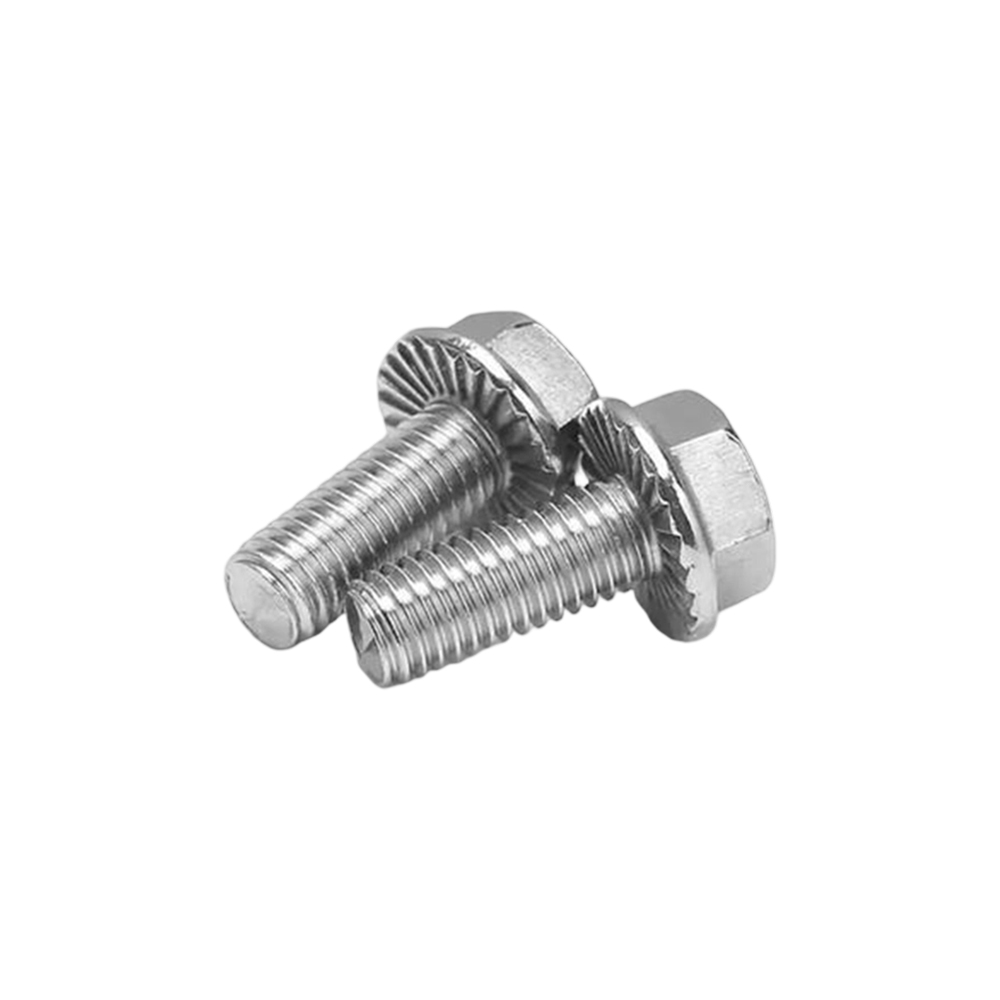 Cold-Forged Hex Flange Bolts with Anti-Slip TeethFor chassis joints needing wide load distribution, these hex flange bolts combine head and washer to reduce parts and assembly time. Available in metric and imperial sizes, with anti-loosening features and multiple corrosion-resistant coatings.View Product →
How to Read an Automotive Fastener Specification
A complete automotive fastener specification defines seven attributes: standard, thread callout, material, property class, coating, quality requirements, and packaging. Missing fields leave room for interpretation, and interpretation creates field variability.
Example: M10 x 1.5 x 40 mm hex flange bolt, ISO 4162, Property Class 10.9, zinc-nickel plated with seal topcoat, 8 micrometers minimum plating. The standard fixes geometry, the callout fixes pitch and fit, and plating fixes corrosion performance. Change one field and the joint changes.
- Standard or drawing number that defines head geometry and dimensions
- Thread callout with pitch and tolerance class, such as M10 x 1.5 with 6g fit
- Material and property class with tensile and yield strength
- Coating with minimum thickness and salt-spray hours
- Testing, lot traceability, and packaging requirements for line feed
The most common specification errors are mixing metric and imperial threads in one assembly, specifying a coating without a salt-spray hour requirement, and ignoring galvanic corrosion when aluminum panels meet steel fasteners.
Why Bolted Joints Fail: Field Data Every Specifier Should Know
Field returns consistently show that fastener failures come from assembly and material decisions, not from fastener geometry.
Four dominant causes appear in returned automotive fasteners, and each is prevented at a different stage of the product lifecycle.
Over-torque is fixed on the assembly line with torque-angle tools. Corrosion is fixed in the coating specification. Fatigue is fixed in joint design with higher preload. Wrong grade is fixed with material certificates and incoming inspection.
Sourcing Automotive Fasteners for OEM Production
OEM buyers should verify a supplier's quality system, testing capability, process coverage, and production capacity before approval, because fastener quality is statistically invisible until a recall.
A reliable supplier holds automotive-grade quality certifications, operates an internal precision testing laboratory, and controls multiple processes in-house, from cold forging and CNC turning to stamping and sheet metal fabrication. Yongji Precision Hardware Co., Ltd., founded in 2003, has served more than 200 international OEM and ODM customers from four production bases in China and Vietnam.
- Quality management certification covering automotive series production
- In-house laboratory with dimensional, mechanical, and metallurgical equipment
- Multi-process capability: cold heading, CNC turning, stamping, and sheet metal
- Salt-spray and torque-angle test reports available for each production lot
- Capacity for both prototypes and mass production with global delivery
Thin-sheet joints such as battery trays and body panels cannot always accept welded nuts. Rivet nuts and self-clinching hardware create threads from one-sided access where the sheet is too thin for tapped holes; our article on riveted fasteners in OEM design explains how to choose types and materials.
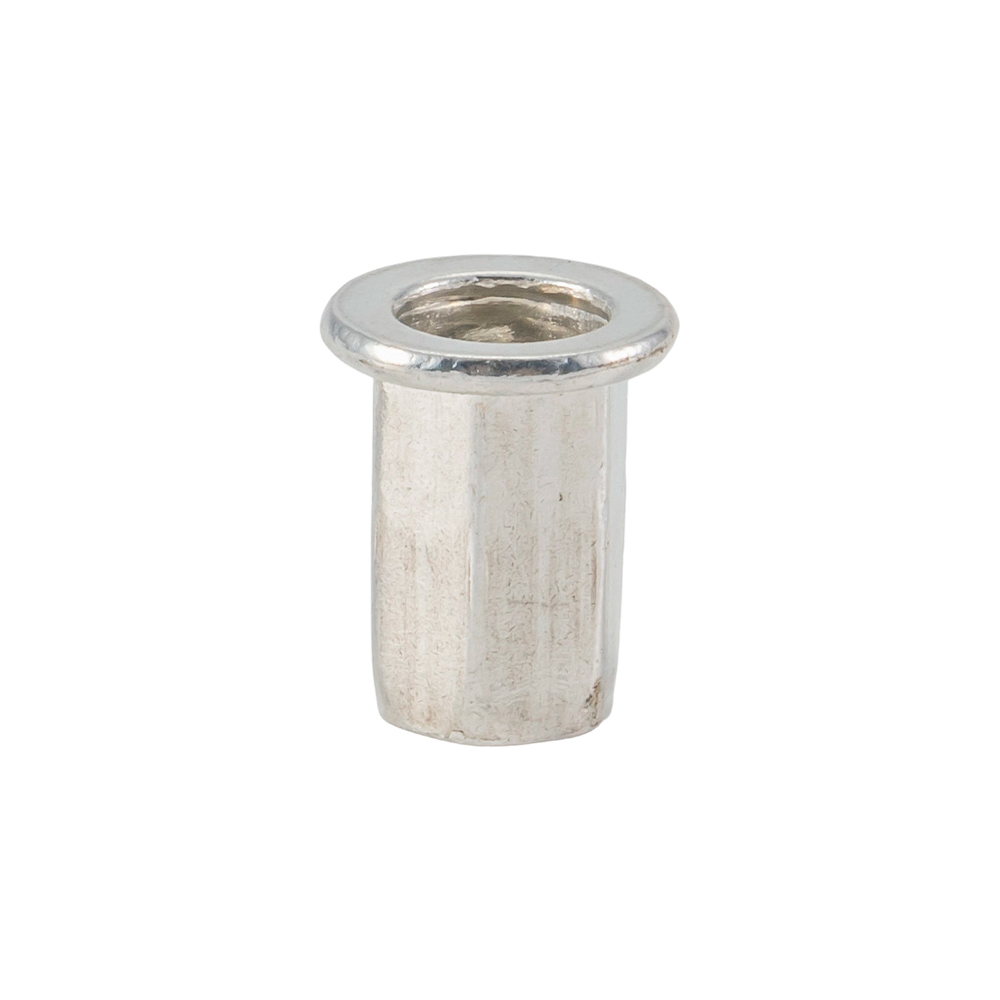 Rivet Nuts for Thin-Sheet Threaded ConnectionsRivet nuts create threads from one-sided access, ideal for battery trays and body panels where welded nuts are impractical. Offered in M3 to M10 with carbon steel and stainless options and various surface finishes.View Product →
Electrified powertrains add more complexity: battery enclosures must manage thermal expansion, vibration, and crash loads while staying sealed, so structural sheet metal and precision housings matter as much as the bolts that hold them.
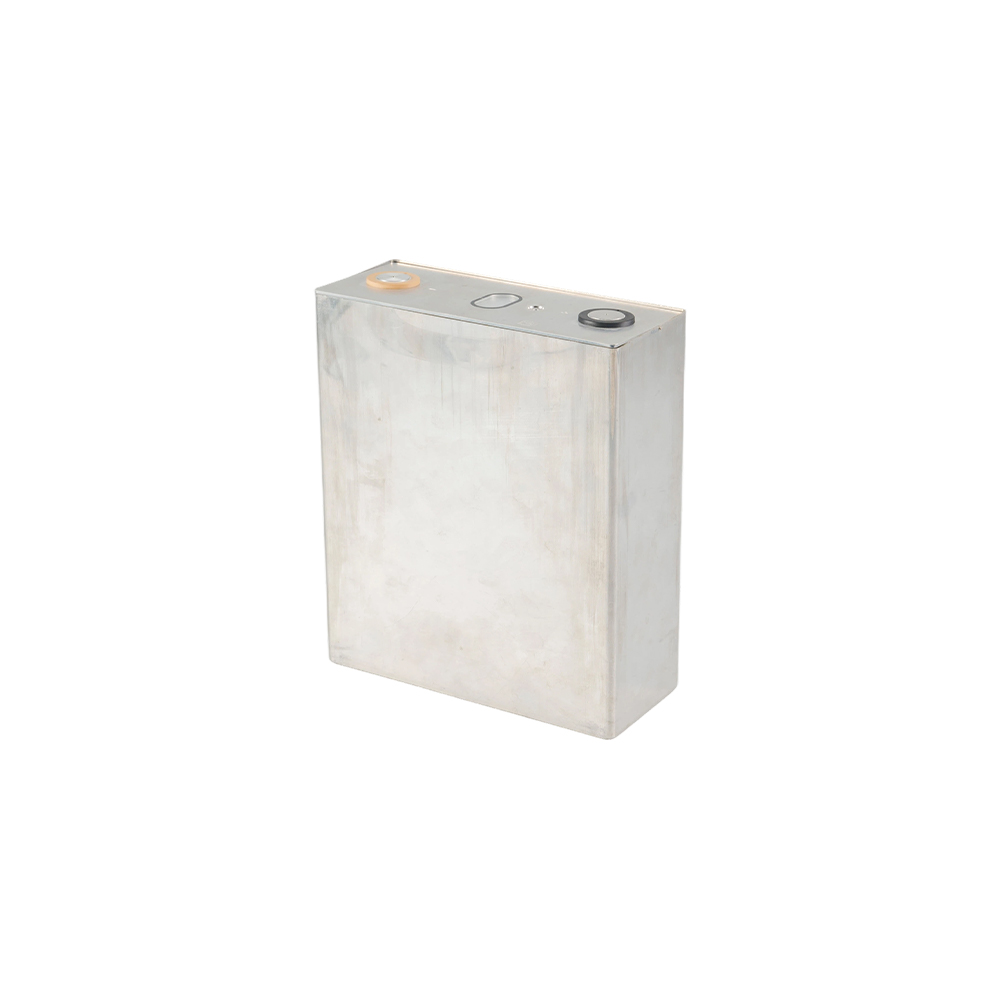 Square Aluminum Shell for Power Battery EnclosuresThis precision A3003 aluminum casing supports battery packs in new energy vehicles and storage systems. Its deep-drawn structure and optional coatings help manage thermal expansion, vibration, and sealing demands in electrified powertrains.View Product →
For regional distributors and channel partners, distribution partnerships are supported with documented quality systems and global logistics.
Automotive Fasteners: Frequently Asked Questions
How do I choose between a bolt, a screw, and a stud?
Use a bolt when the joint needs a defined clamp load and you can access a nut or a threaded hole. Use a screw when the mating material is soft enough to form threads, such as plastic trim. Use a stud when a component must be positioned before fastening, like a cylinder head or exhaust flange.
What does Property Class 10.9 mean on a bolt?
It means the bolt has a minimum tensile strength of 1,040 MPa and a yield strength of roughly 940 MPa. Property Class 10.9 fasteners are heat-treated alloy steel and the default choice for high-load suspension and drivetrain joints.
Why do correctly designed automotive fasteners still fail?
The three most common causes are over-torque during assembly, corrosion that reduces the effective cross-section, and fatigue from insufficient preload. Each has a different prevention path: torque-angle controlled tools, corrosion-resistant coatings such as zinc-nickel, and joint design that keeps fastener stress below the fatigue limit.
What should I ask a fastener supplier before approving them?
Ask for their quality certification, in-house inspection capability, material certificates for every lot, salt-spray test data for the proposed coating, and evidence of multi-plant production capacity. A manufacturer such as Yongji Precision Hardware Co., Ltd. provides all five because it operates its own laboratory and production sites.
Recommended Products
Copyright © 2026 by Yongji Precision Hardware Co., Ltd. Rights Reserved.
Custom Fasteners & Turned Parts, Precision Hardware Manufacturers
