
 English
 中文简体
中文简体 Español
Yongji Precision | A Practical Guide to Metal Stamping
The car bodies, smartphone housings and appliance components we see every day may look completely different, yet many of them are produced using the same fundamental manufacturing process: metal stamping.
As one of the essential processes in modern manufacturing, stamping transforms flat metal sheets into precise, functional components through controlled forming and cutting operations. In this article, Yongji Precision takes a closer look at how the process works.
Understanding Stamped Parts — Processing Metal Sheets from 0.15 to 5.25 mm
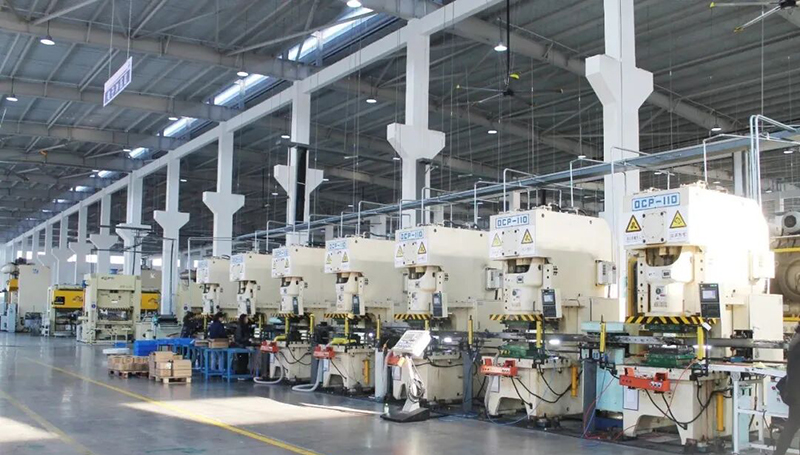
What Are Stamped Parts?
Stamped parts are components produced by applying force to sheet metal, strip or tubing through a die, causing the material to undergo plastic deformation or separation until the required shape, dimensions and mechanical properties are achieved.
Stamped components can range from tiny electronic connectors to large automotive body panels. One of the key advantages of stamping is its ability to use standardized tooling for the efficient mass production of complex parts while maintaining a high degree of dimensional consistency from one part to the next.
How the Stamping Process Works
Metal stamping primarily makes use of the plastic deformation characteristics of metals. Most stamping operations are performed at room temperature, while hot stamping may be used for certain complex parts to reduce forming resistance.
During the process, a die applies controlled force to the material, causing it either to flow into a predetermined shape or to separate along a defined profile.
Stamping operations can generally be divided into two categories:
Separation operations:
These processes use the cutting edges of the punch and die to shear the material along a specified contour. Typical examples include punching and blanking. Button openings in electronic housings and locating holes in automotive chassis components are commonly produced using these methods.
Forming operations:
These processes reshape the material through controlled plastic deformation within the die. Common operations include bending, drawing and flanging. Curved automotive door panels and folded edges on appliance housings are typical examples.
From Sheet Metal to Finished Stamped Components
Producing a qualified stamped part requires careful control throughout the entire process, from material selection and die development to stamping and inspection.
1. Material Selection
Material selection directly affects formability, strength, corrosion resistance and product weight. Common stamping materials include:
Low-carbon steel: Good formability and cost efficiency, suitable for general structural components.
Stainless steel: Good corrosion resistance, commonly used in kitchen appliances, sanitary equipment and medical-related applications.
Aluminum alloys: Combine low weight with good mechanical performance and are widely used in new energy and lightweight structural applications.
Special alloys and high-strength steels: Used where greater mechanical strength or impact resistance is required, such as certain automotive structural and safety components.
During material verification, Yongji Precision uses methods such as spectrometric analysis and tensile testing to evaluate key properties including yield strength and elongation, helping ensure that materials are suitable for the intended forming process.
2. Die Design and Manufacturing
The die is one of the most critical elements in stamping, as its design and manufacturing accuracy directly affect part quality.
A properly designed stamping die must address several factors:
Dimensional accuracy: The die cavity must closely match the product geometry to minimize dimensional deviation during forming.
Process optimization: Cutting clearances, edge geometry and corner radii must be selected according to the material and forming requirements to reduce the risk of cracking, wrinkling and other defects.
Production efficiency: Progressive dies can combine several operations, such as punching, bending and forming, into a continuous production process.
Yongji Precision manufactures dies using processes including CNC machining, wire EDM and electrical discharge machining. Heat treatment and surface coatings may also be applied where required to improve hardness, wear resistance and service life for long-term production.
3. Stamping Production
Press performance and process parameters are critical to stable stamping results.
For separation processes such as punching, cutting conditions must be controlled to maintain clean edges and minimize burr formation.
For forming processes such as deep drawing, parameters including blank-holder force, stroke and forming speed must be carefully controlled to reduce excessive thinning, cracking and material wrinkling.
Yongji Precision uses servo press equipment that allows precise adjustment of forming parameters, helping improve forming stability and reduce springback in complex stamped components.
4. Inspection and Quality Control
After stamping, components may undergo multiple levels of inspection depending on product and customer requirements.
Dimensional inspection:
Coordinate measuring machines and other measuring equipment are used to verify critical dimensions, hole positions and geometric tolerances.
Visual inspection:
Optical inspection and other methods may be used to detect scratches, dents, burrs and surface defects.
Performance testing:
For critical components, hardness, tensile strength and other mechanical properties may be tested to verify compliance with specified requirements.
Why Is Stamping Widely Used?
Stamping offers several advantages for industrial production:
High production efficiency:
Once tooling has been developed, stamping is well suited to high-volume production and can produce complex geometries at high speed.
Predominantly cold working:
Most stamping processes are performed at room temperature, reducing the need for additional heating. Hot stamping is used only where material or forming requirements make it necessary.
Good production consistency:
Well-designed dies and stable process parameters help maintain consistent dimensions and product quality throughout mass production.
Applications of Stamped Components
Stamped parts are widely used in industries including automotive manufacturing, electronics, new energy, household appliances and building hardware.
They can generally be divided into two major categories:
1. Separation-type stamped parts
These include punched and blanked components, where the material is sheared along a defined profile to produce holes or external contours.
2. Formed stamped parts
These include bent, drawn and flanged components, where the material undergoes controlled plastic deformation to create three-dimensional or complex geometries.
The effectiveness of the entire stamping process depends on accurate tooling, suitable material properties and stable process control. Together, these factors make stamping an efficient and economical solution for high-volume manufacturing.
Yongji Precision's Stamping Capabilities
With extensive experience in precision stamping, Yongji Precision focuses on two key factors: tooling accuracy and process stability.
From material verification and die development to stamping production and inspection, we maintain an integrated manufacturing and quality-control process. Whether the requirement involves complex forming, tight dimensional control or stable high-volume production, we work with customers to develop manufacturing solutions suited to their actual application requirements.
For more information about our stamping capabilities or custom manufacturing services, please contact Yongji Precision to discuss your drawings, specifications and project requirements.
Copyright © 2026 by Yongji Precision Hardware Co., Ltd. Rights Reserved.
Custom Fasteners & Turned Parts, Precision Hardware Manufacturers
