
 English
 中文简体
 Español
A Practical OEM Sourcing Guide to Appliance Stamping and Fastener Parts
Content
- 1 The Shared Design Responsibility of Stampings and Fasteners
- 2 The Stamped Component Families That Recur in Appliance Design
- 3 Fastener Selection: Matching the Joint to the Environment
- 4 Materials, Plating, and Coatings That Keep Appliance Joints Alive
- 5 Cost Drivers in a Stamping and Fastener Program
- 6 Five Supplier Checks before You Approve the Tool
- 7 Frequently Asked Questions
A drum washing machine came back from the field with two repeated defects: a rattle at the motor mount and an intermittent error on the control board.
The cause traced to one stamped ground clip with an uncontrolled burr and one hex flange screw that had lost its preload. They came from different suppliers who never saw each other's drawings. That gap between a stamping and its fastener is where warranty money disappears.
This guide shows OEM engineers and buyers how to evaluate appliance stamping and fastener parts as one system: component categories, fastener geometries, materials and coatings, and supplier checks that keep a launch on schedule. The practices come from Yongji Precision Hardware Co., Ltd., a contract manufacturer with a Suzhou headquarters, a Yangzhou mass-production base, and two Vietnam plants producing stamped terminals, sheet-metal enclosures, and custom fasteners under one quality system.
Stamped components and the fasteners that join them share three requirements: dimensional repeatability, material traceability, and surface protection.
A stamped bracket holds its hole positions only if the die, the coil stock, and the press settings remain in control across a full batch. A screw holds its clamp load only if thread profile, hardness, and plating stay consistent from lot to lot. The interface, meaning the hole pattern and the contact area, is where the two products work together or fail together.
Core definition
Appliance stamping is the high-volume cold forming of rolled steel, aluminum, or copper strip into functional sheet-metal parts such as brackets, terminals, springs, shields, and enclosures. Fastener parts in the same program are the screws, nuts, rivets, and captive hardware that join those stampings to the appliance frame.
Home appliances run for one to two decades while facing humidity, detergent residues, thermal cycling, and motor vibration, yet component cost must fit a consumer price point. That is why engineers choose progressive-die stamping, standard fastener families, and proven plating systems.
The Stamped Component Families That Recur in Appliance Design
Every appliance program draws from the same short menu of stamped components, and each family carries its own critical dimensions.
- Mounting brackets and plates: motor mounts, hinge reinforcements, and PCB supports. Hole position, flatness, and burr direction are the critical features.
- Contact terminals and springs: current paths and switching forces for relays, door interlocks, and heating elements. Material thickness, contact area, and spring rate matter most.
- EMI and RF shields: cans and cover plates that protect control boards. Flatness, edge finish, and sheet conductivity decide how well the shield seats.
- Busbars and power leads: conductors that move current from the input to the motor and heater. Cross-section, bend radius, and plating quality carry the electrical load.
- Retainers, clips, and strain-relief parts: anchors for cables and hoses. Fatigue life and clean edges prevent stress cracks.
A terminal that snaps into a housing and holds a wire is also a fastener, which is why grouping parts by function makes combined supply attractive.
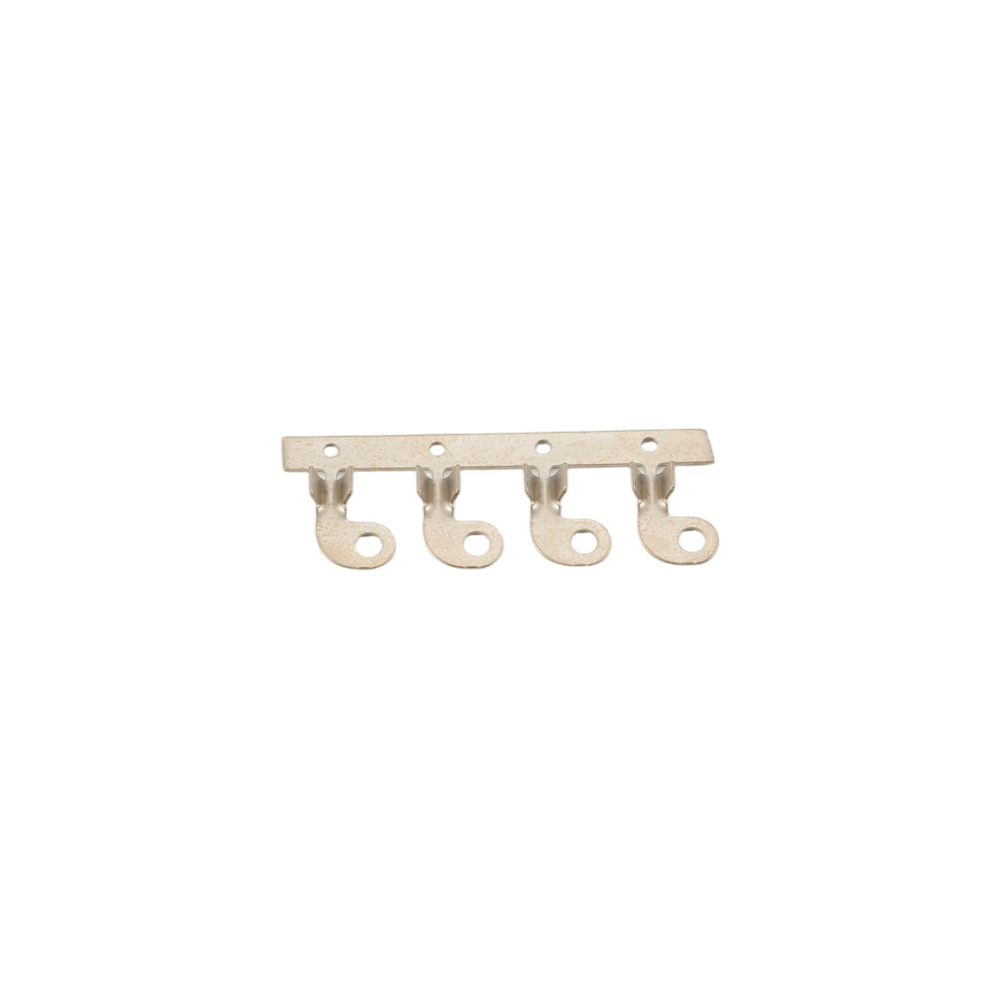 Continuous Stamped Terminal for PCB and Connector AssembliesThis terminal is produced by high-speed stamping and electroplating, available in brass, phosphor bronze, or copper alloys. It suits PCB conduction, wire harness semi-finished parts, and connector assembly, making it a practical choice when grouping related fasteners for a combined supply.View Product →
Fastener Selection: Matching the Joint to the Environment
The right appliance fastener is chosen by matching the joint's duty cycle to its locking mechanism, thread form, and corrosion protection, not by matching a catalog size.
The first decision is service access. Joints that are never opened again suit self-drilling or thread-forming screws at the lowest installed cost. Joints that a technician must reach favor hex flange screws and screw-washer assemblies that keep the fastening predictable.
| Fastener style | Typical application | Vibration behavior | Reuse and service |
| Hex flange bolt with nut | Motor and pump brackets | Stable when torqued correctly | Reusable if threads are sound |
| Screw-washer assembly (Sems) | Covers, switches, panels | Stable, washer stays captured | Reusable, no lost washer |
| Self-drilling screw | Sheet-metal panels | Moderate, can strip threads | Replace on service |
| Rivet nut | Thin-sheet attachment points | High, creates threaded land | Thread repair possible |
| Self-clinching nut | Controller mounts in panels | High, flush and strong | Permanent insert, reusable thread |
Rivet nut route
Installs from one side after painting. Handles a wider hole tolerance and works on tubular frames. Adds a fastener point where no backside access exists.
Self-clinching nut route
Needs sheet hardness within a stated band. Creates a flush thread before forming or coating. Best for flat panels with repeated assembly cycles.
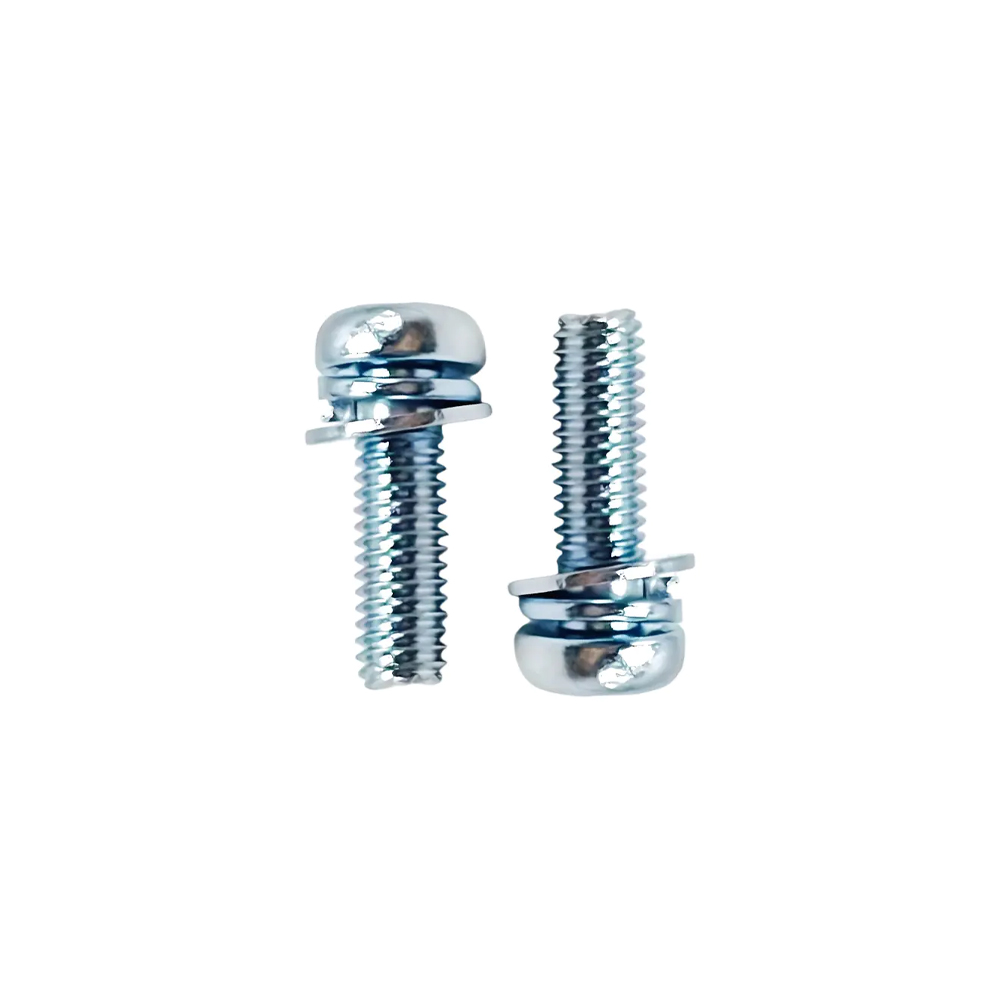
Screw-washer assemblies reduce assembly error because the washer cannot drop off on the line, and automated drivers can run at full speed without relying on a worker to hold the washer.
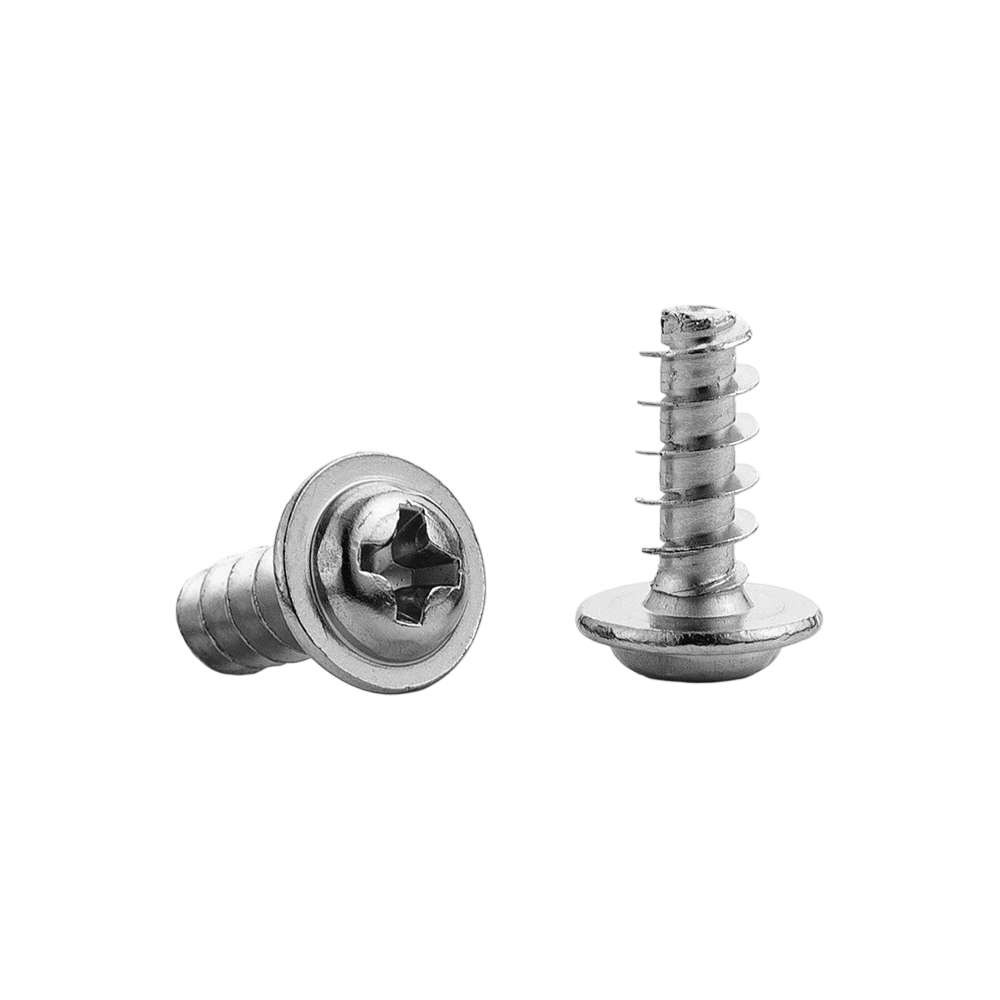
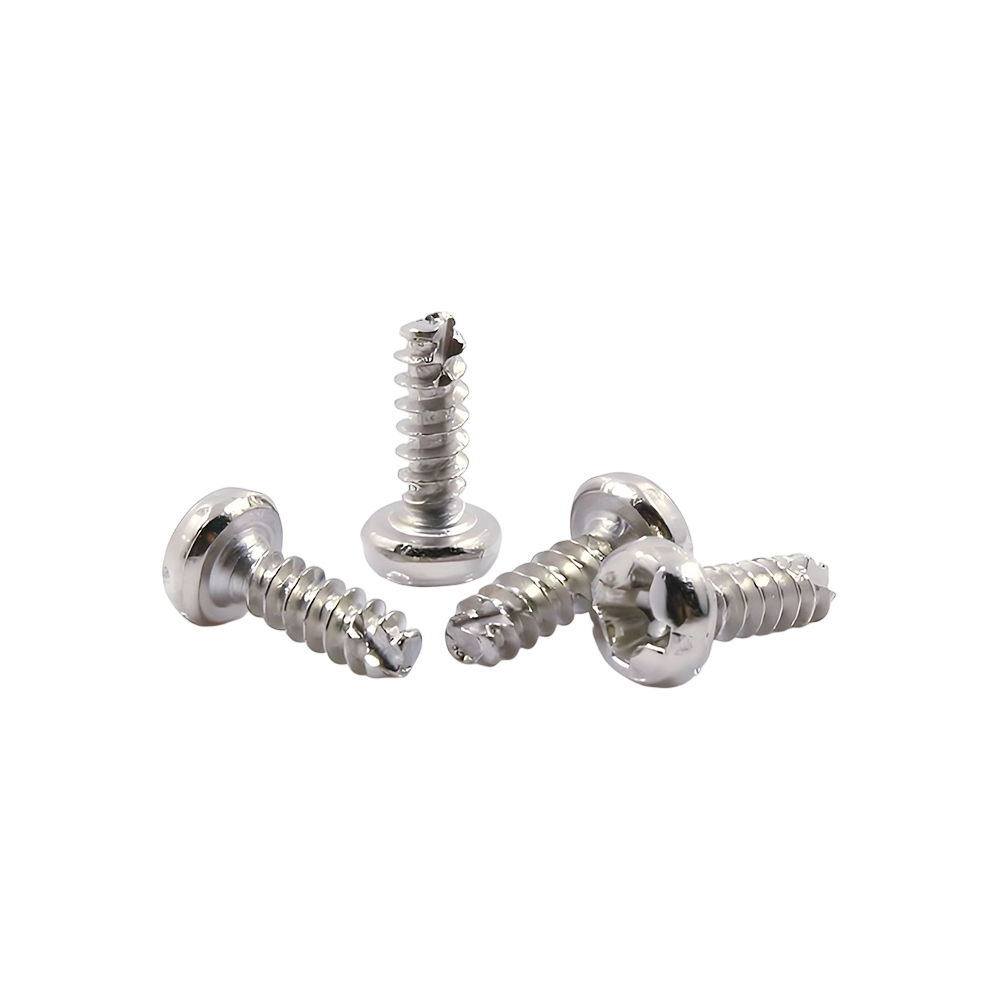
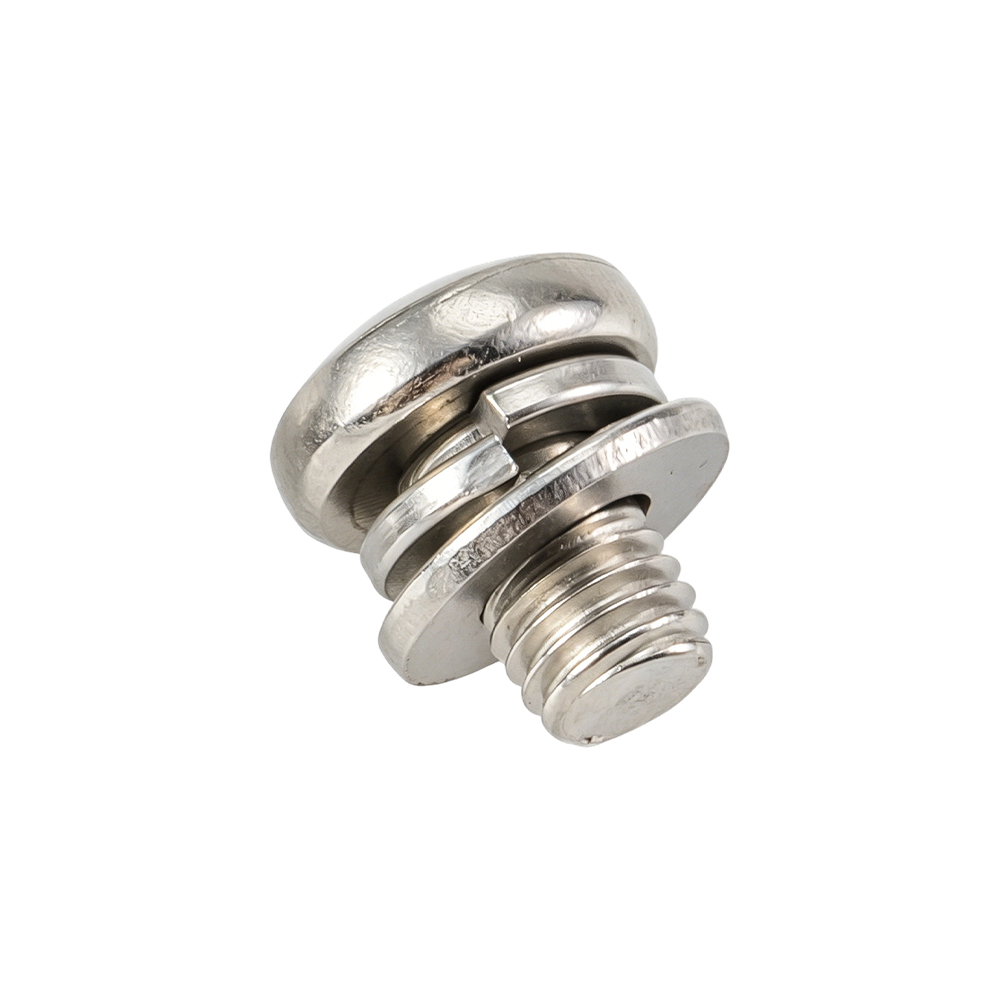 Cross Recessed Pan Head SEMS Screw with Captive WashersThis three-piece screw integrates a spring washer and flat washer to prevent loosening under vibration and protect joined surfaces. Offered in M2–M8 with stainless or carbon steel and multiple platings, it supports automated assembly and reliable fastening across electronics and equipment.View Product →
Materials, Plating, and Coatings That Keep Appliance Joints Alive
Material grade and surface finish decide whether a bracket or screw stays stable for two decades under humidity, heat, and cleaning chemistry.
- Cold-rolled steel (SPCC, DC01): brackets, clips, and shields. Low cost and good formability, with zinc plating or powder coating before it faces moisture.
- Stainless steel (304, 430): springs, latches, and surfaces near steam or food. No plating needed, but it creates galvanic risk against aluminum.
- Copper alloys (C1100, phosphor bronze): terminals, contacts, and busbars. Tin or silver plating keeps contact resistance stable.
- Aluminum (5052, 6061): heat sinks and lightweight structures. Anodizing adds protection, and steel fasteners against aluminum need isolation.
Galvanic corrosion is the most common hidden failure in appliance joints. A steel screw clamped into an untreated aluminum bracket in humid air creates a small cell that eats the bracket surface. The fix is a plated washer, a chosen coating, or a sealed interface, and it is only possible when the stamping and the fastener are designed together.
Part consolidation turns this knowledge into savings. One stamped plate with welded studs can replace a bracket, a spacer, and an assembly step.
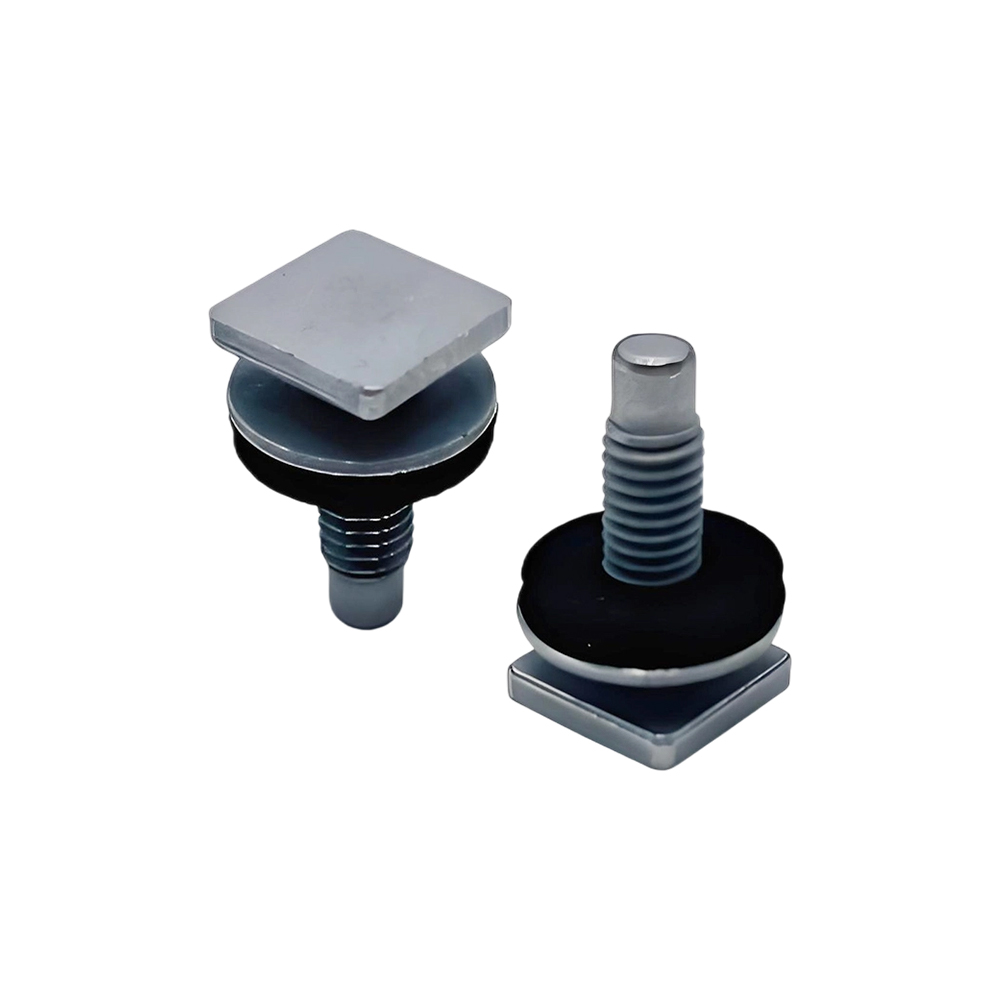
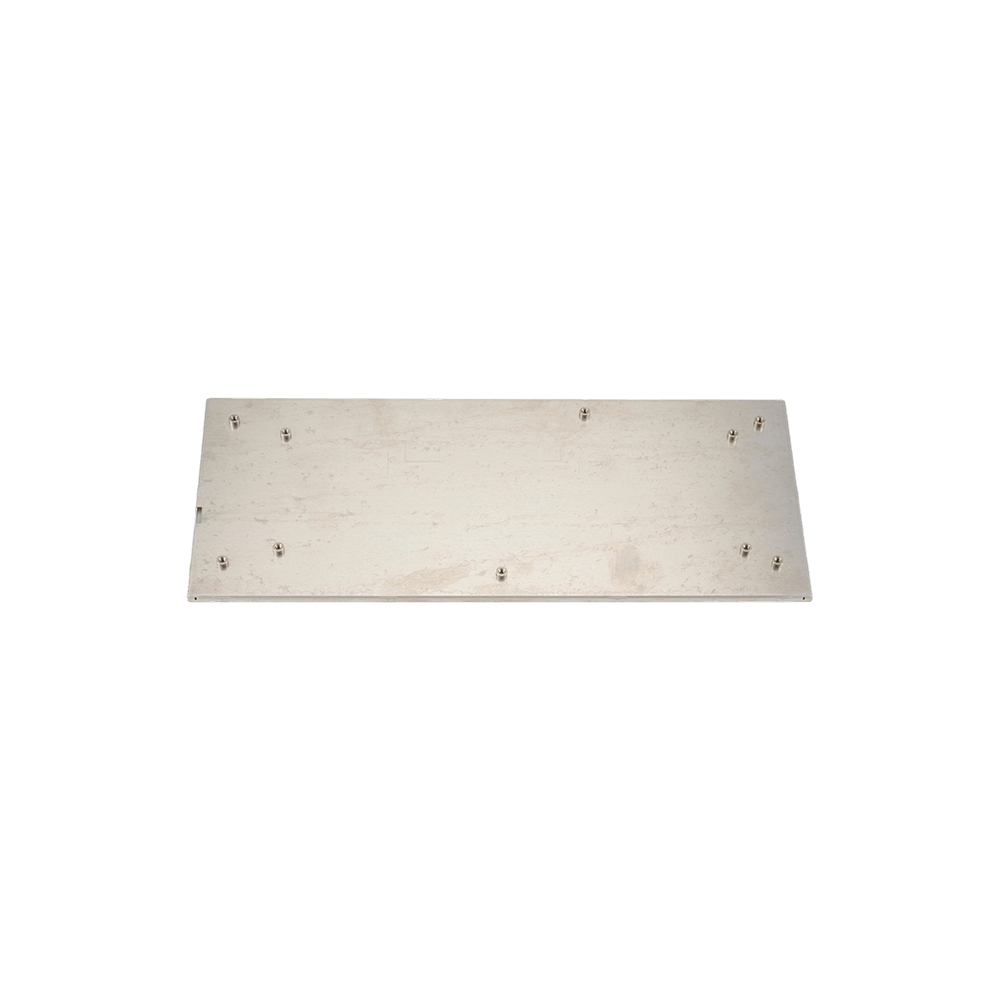 Heat Dissipation / Mounting Base Plate with StudsStudded base plates are precision structural components that integrate mounting, fixing, and heat dissipation functions. They are manufactured using CNC machining or s...View Product →
Cost Drivers in a Stamping and Fastener Program
Tooling and raw material make up the majority of landed cost in a typical high-volume program; finishing and secondary operations come next.
Engineers who understand this split can cut cost without weakening a part. Loosening a non-critical tolerance, widening a hole-position band, or choosing a standard plating thickness saves more than any discount on an hourly rate.
Volume changes the picture. Below roughly 50,000 pieces a year, tooling dominates, so a simpler die with a slower cycle is the economic choice. Above that volume, progressive tooling pays back quickly.
Five Supplier Checks before You Approve the Tool
Qualification should verify process control and material traceability across a real production run, not the beauty of a prototype.
- Check the die room. In-house die design and maintenance mean shorter lead times for changes and a realistic tooling quote.
- Check material certification flow. The supplier attaches a mill certificate, batch code, and thickness reading to every coil used on your part.
- Check statistical process control. Ask for Cpk values on critical dimensions from a recent run, not from the sample.
- Check the finishing line. Plating must come with bath records and corrosion-test results, whether in-house or subcontracted.
- Check the assembly interface. Sample stampings and fasteners from the same line and assemble them once, exactly as your production line will.
International OEMs should also verify delivery depth. Multi-site suppliers such as Yongji, with China and Vietnam capacity, can balance production, adapt to regional content rules, and shorten logistics. Companies that resell standard product lines can join the distributor program with its own stocking terms.
A supplier that makes the stamping, applies the finish, and supplies the fastener from one quality system gives you a single point of accountability. That is the most effective way to eliminate the interface failures that warranty programs are built on.
Frequently Asked Questions
What is appliance metal stamping?
Appliance metal stamping is the high-volume cold forming of flat-rolled metal into functional parts such as brackets, terminals, springs, shields, and enclosures for household and commercial appliances. Progressive dies feed coil strip through successive stations to finish a part in one press cycle.
Which materials are most common in appliance stamping?
Cold-rolled steel (SPCC, DC01) dominates structural stampings. Stainless steel appears in springs and steam-exposed parts, copper alloys in terminals and busbars, and aluminum in heat-dissipation structures.
What is the difference between a standard and a custom fastener?
A standard fastener uses a common catalog geometry and gives the lowest piece price. A custom fastener adds a specific head form, drive, washer, thread condition, or coating when assembly automation, tamper resistance, or service behavior demands it.
Can one supplier handle stamping and fasteners together?
Yes. One supplier avoids the tolerance mismatch and plating coordination problems that appear when two vendors each design half of a joint. In-house control of stamping, machining, and surface treatment gives the OEM one quality system, one drawing set, and one corrective-action loop.
When you prepare a request for quotation for a new appliance program, include the mating hole callouts and the coating specification on the fastener drawing. That single habit prevents most interface disputes before tooling starts.
Copyright © 2026 by Yongji Precision Hardware Co., Ltd. Rights Reserved.
Custom Fasteners & Turned Parts, Precision Hardware Manufacturers
