
 English
 中文简体
中文简体 Español
Hex Flange Bolts: How to Choose the Right Spec, Material, and Supplier
Content
- 1 Hex Flange Bolts vs. Standard Hex Bolts: What Changes Under Load
- 2 Material and Coating Ladder for Hex Flange Bolts
- 3 How to Select Hex Flange Bolts: A Step-by-Step Decision
- 4 Sourcing Hex Flange Bolts: Verifying Supplier Capability
- 5 Torque, Friction, and the Hidden Variables in Installation
- 6 Frequently Asked Questions
An assembly supervisor in a truck chassis plant watches a new batch of hex flange bolts deform the flange edge slightly, even though the torque spec has not changed. The bolt grade looks identical, but the coating and lot history are different. This kind of failure happens when engineers treat hex flange bolts as ordinary hex bolts with a wider head.
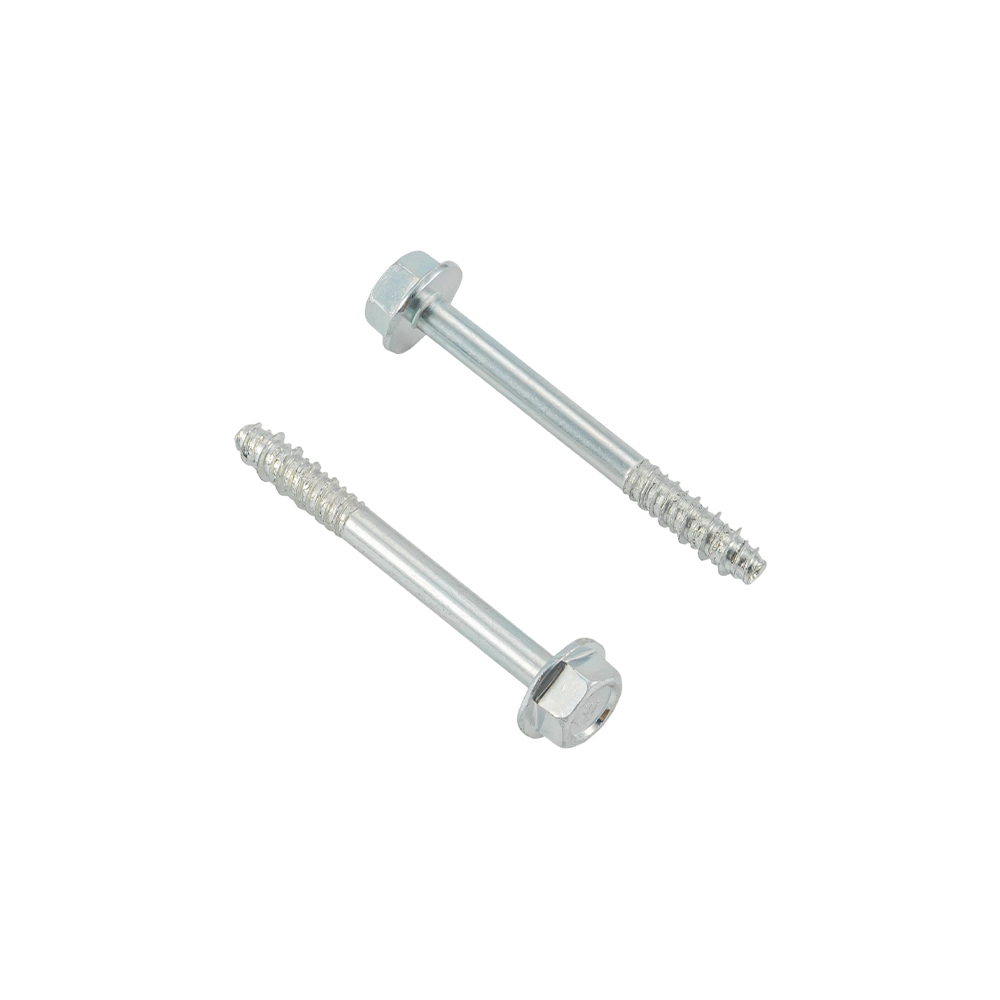
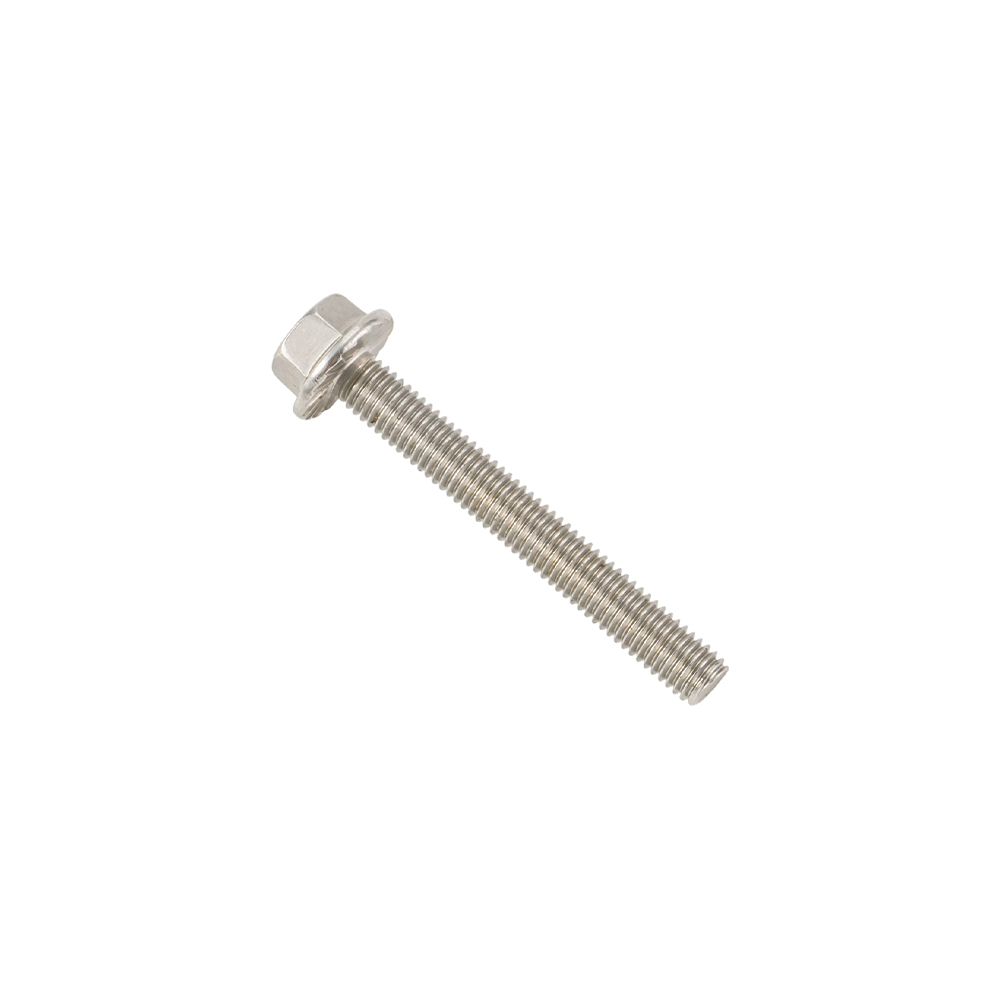
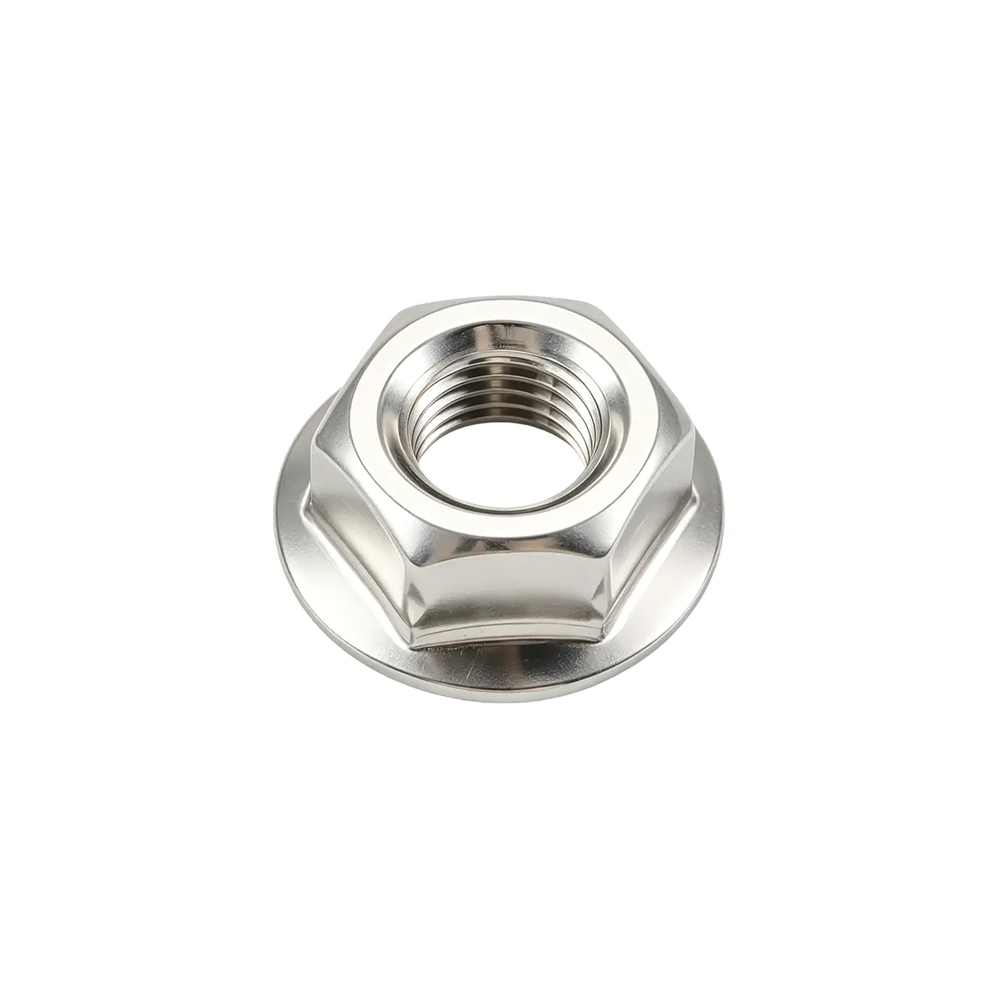
Hex flange bolts solve a real engineering problem: the integrated flange spreads clamp load over a larger bearing area and removes the need for a separate washer. However, selecting them correctly requires understanding grade, material, coating, friction, and supplier process control. This guide explains each of those variables and how to turn them into a practical purchasing specification.
Hex Flange Bolts vs. Standard Hex Bolts: What Changes Under Load
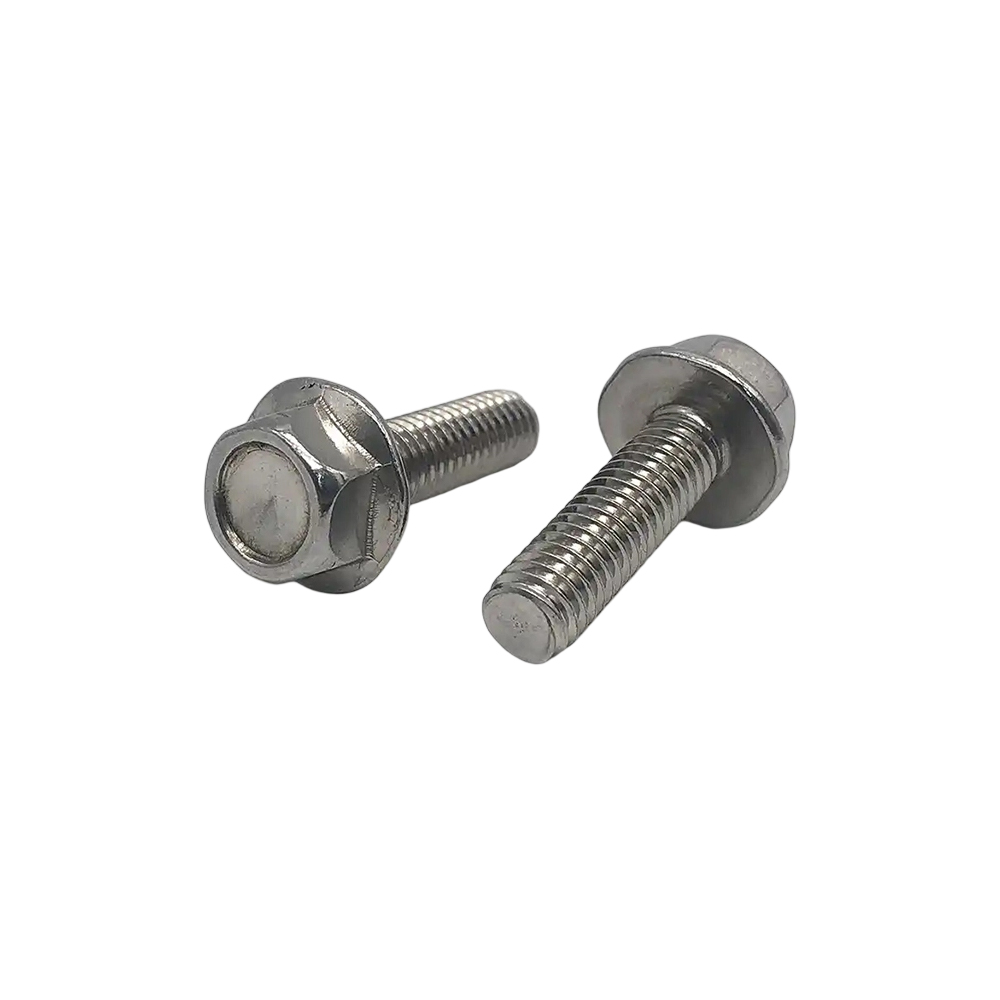
A hex flange bolt is not a stronger version of a standard hex bolt; it is a more efficient load-spreading device.
With a standard hex bolt, the load passes through a relatively small contact ring under the head. If the clamped material is soft, the head embeds and the preload drops. A flange bolt integrates the washer into the head. The larger flange diameter lowers contact pressure and reduces embedment, which means the joint retains clamp load better over time. This is the main reason automotive, appliance, and enclosure manufacturers switch to flange bolts in high-vibration joints.
Hex Bolt with Separate Washer
- Two or three components on the assembly line
- Smaller bearing area under the head unless the washer is oversized
- Washer can tilt, walk, or be forgotten during manual assembly
Hex Flange Bolt
- One part instead of two
- Flange is forged as part of the head, so bearing geometry is repeatable
- More consistent run-out and clamp load distribution
Material and Coating Ladder for Hex Flange Bolts
Material grade decides how much preload the bolt can hold; coating decides how long that preload lasts in a corrosive environment.
For carbon steel flange bolts, the most common grades are 4.8, 8.8, and 10.9. Stainless steel grades A2-70 and A4-80 cover food, medical, and marine environments. The table below shows typical tensile strength and proven uses.
| Grade | Material | Tensile strength (MPa) | Typical use |
| 4.8 | Low-carbon steel | 400 | Furniture, light enclosures |
| 8.8 | Quenched and tempered carbon steel | 800 | Automotive chassis, machine frames |
| 10.9 | Alloy steel, quenched and tempered | 1040 | Heavy equipment, high-strength joints |
| A2-70 | Stainless steel grade 304 | 700 | Food processing, humid areas |
| A4-80 | Stainless steel grade 316 | 800 | Marine, chemical environments |
Coating selection is equally important. The most common options for hex flange bolts are zinc plating for general indoor use, zinc-nickel for high corrosion resistance, and zinc flake for applications sensitive to hydrogen embrittlement. Each coating changes the friction coefficient under the flange, so the torque spec must be reviewed when the coating changes.
How to Select Hex Flange Bolts: A Step-by-Step Decision
Selection is a sequence of four engineering decisions, not a single diameter check.
- Calculate required clamp load. Use the external load, stiffness of the clamped parts, and acceptable gap.
- Select a strength grade. Choose the lowest grade whose proof load gives an adequate safety factor; higher grades cost more and become more sensitive to hydrogen embrittlement.
- Choose the coating. Balance corrosion resistance, installation friction, and compatibility with the clamped material.
- Check head geometry and tool access. Flange diameter and head height must clear adjacent parts and fit the tightening tool.
Sourcing Hex Flange Bolts: Verifying Supplier Capability
A reliable hex flange bolt supplier must control the entire chain, from raw material certificates to final plating inspection.
Yongji Precision Hardware Co., Ltd., a precision fastener manufacturer in Suzhou, treats hex flange bolts as part of a broader metal component portfolio. With four production bases in China and Vietnam, the company performs cold heading, CNC machining, stamping, and runs an internal precision testing laboratory. This integration avoids the classic failure mode where a trading company sends a drawing to an unknown factory and cannot verify what arrives.
Before approving a new hex flange bolt supplier, verify that they can provide the following evidence:
- Material certificates with heat numbers
- Plating thickness measurement reports
- Proof-load and hardness test results from a qualified lab
- Flange diameter, perpendicularity, and run-out measurements
Torque, Friction, and the Hidden Variables in Installation
Torque is not clamp force. Friction in the threads and under the flange consumes most of the energy you apply with a torque wrench.
In a typical uncoated steel bolt, about half of the torque is needed to overcome thread friction, another 30 to 40 percent goes into head or flange friction, and only about 10 percent is converted into clamp load. A change in plating, lubricant, or flange surface roughness can shift that balance and make the same torque value meaningless.
Variables that affect the torque-tension relationship on a hex flange bolt include:
- Coating type and lubrication condition
- Surface roughness under the flange
- Residual plating compound or oil on the head
- Hardness of the clamped material
Frequently Asked Questions
Are hex flange bolts stronger than standard hex bolts?
Not by themselves. Strength is set by grade and material. A hex flange bolt uses a different head style that spreads load more evenly, so for the same grade it can deliver a more stable clamping joint, but it does not have a higher tensile capacity than a standard grade-matched bolt.
Can I use a hex flange bolt without a washer?
In most OEM designs, yes. The integrated flange replaces a flat washer. The exception is when the clamped material is softer than the flange, or when a hardened washer is specified to prevent the flange from embedding into the surface.
Does zinc plating affect the torque specification?
Yes. Zinc plating raises friction compared to a plain steel surface, so the same torque produces a lower clamp load. Most zinc-plated hex flange bolts need a slightly higher torque setting or a lubricant to restore a consistent torque-tension relationship.
How do I verify the grade of a hex flange bolt?
Check the grade marks stamped on the head and request a material certificate from the supplier. For a high-volume order, run periodic proof-load tests and hardness checks in a qualified laboratory.
Copyright © 2026 by Yongji Precision Hardware Co., Ltd. Rights Reserved.
Custom Fasteners & Turned Parts, Precision Hardware Manufacturers
